News
Can a Capacitive Touch Screen Manufacturer Produce Custom-Shaped Touch Screens?
Can a capacitive touch screen Manufacturer Produce Custom-Shaped Touch Screens?
As industrial equipment, medical devices, smart terminals, automotive electronics, and new energy systems continue to evolve, manufacturers are placing greater emphasis on product design, human-machine interaction, and mechanical integration.
While traditional rectangular touch screens remain widely used, an increasing number of OEM and ODM projects require custom-shaped touch interfaces, including round, oval, ultra-wide, cut-out, and other non-standard designs.
So, can a capacitive touch screen manufacturer produce custom-shaped touch screens?
Yes.
A manufacturer with strong PCAP (Projected Capacitive) touch technology and engineering capabilities can develop custom-shaped capacitive touch screens based on the customer's mechanical structure and application requirements.
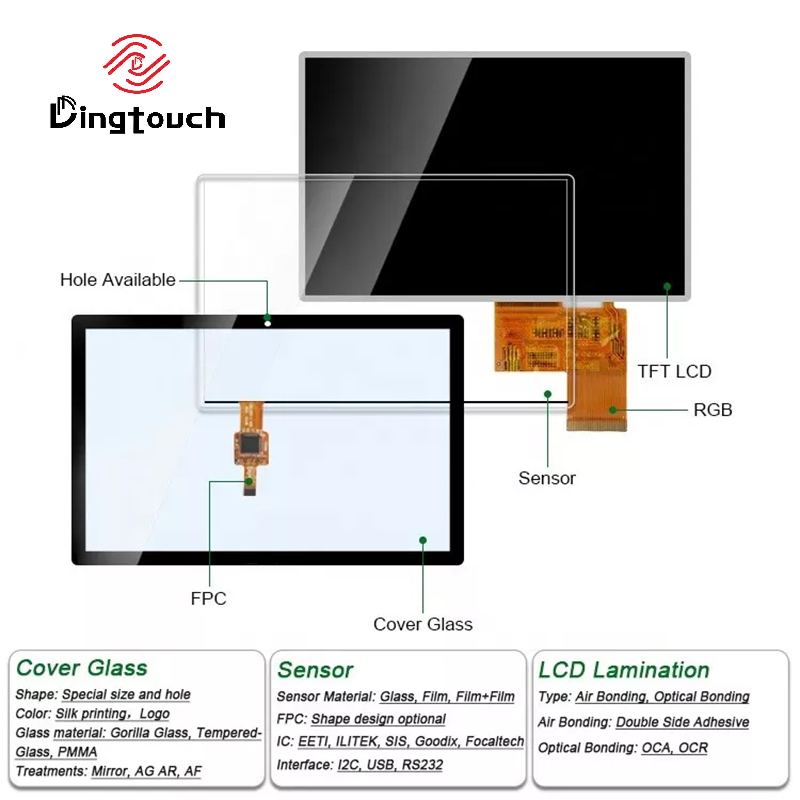
However, a custom-shaped touch screen is much more than a standard rectangular touch panel cut into a different shape. The design may involve the cover glass, touch sensor, FPC, touch controller, electrode pattern, printed bezel, bonding structure, and touch performance.
For OEM projects, engineering design and validation are just as important as manufacturing capability.
What Is a Custom-Shaped Touch Screen?
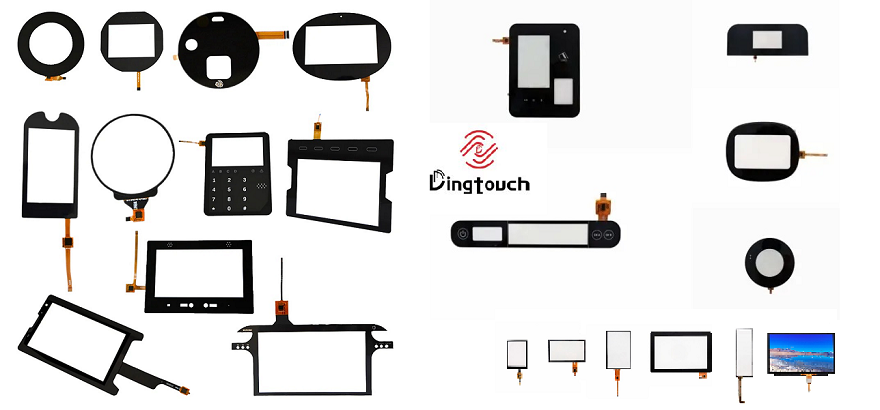
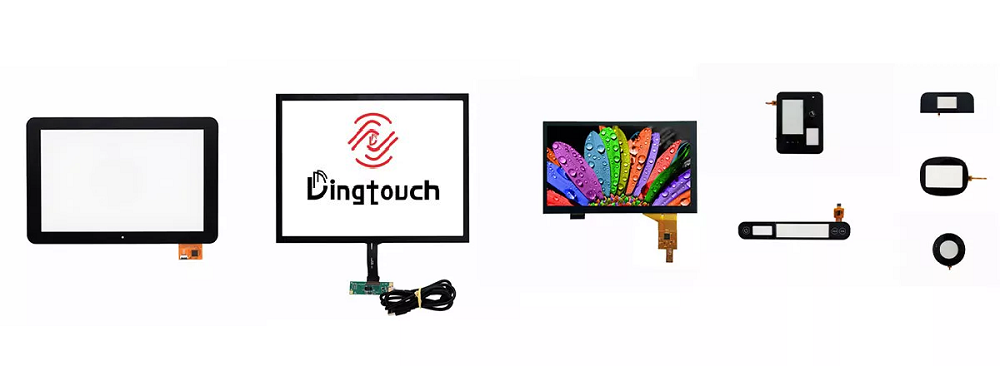
A custom-shaped touch screen is a touch panel whose external outline, active touch area, or mechanical structure differs from the standard rectangular design.
Depending on the equipment's industrial design and internal structure, custom-shaped touch screens can include:
- Round touch screens
- Oval touch screens
- Custom-radius or curved-edge touch panels
- Ultra-wide touch screens
- Ultra-narrow touch panels
- Touch screens with circular openings
- Touch panels with custom cut-outs
- Irregular-shaped touch screens
- Custom bezel designs
- Custom viewing windows
This type of customization allows the touch interface to integrate more naturally with the equipment enclosure instead of forcing the product design to accommodate a standard rectangular panel.
Typical Applications
Custom-shaped PCAP touch screens can be used in:
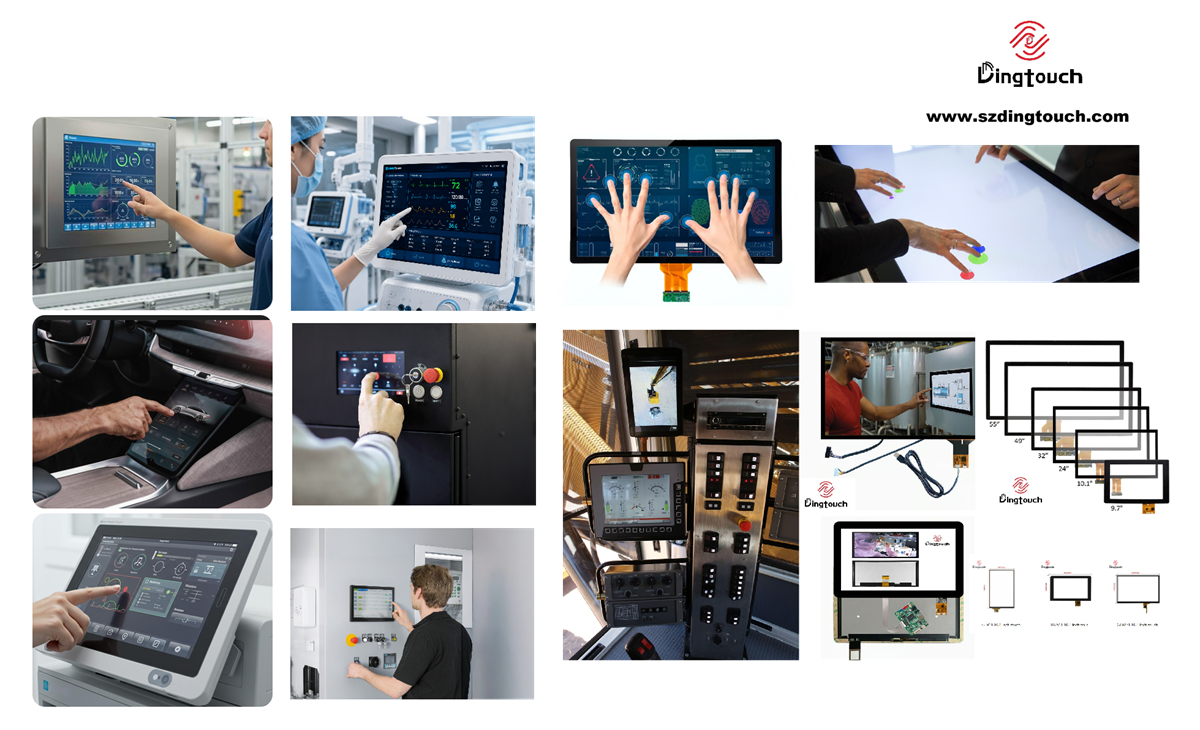
- Industrial control panels
- Industrial HMI systems
- Medical equipment
- Smart home control panels
- Automotive and in-vehicle control systems
- Self-service terminals
- Smart retail equipment
- Elevator control panels
- EV charging equipment
- Smart instruments
- Specialized equipment control terminals
Why Do Custom-Shaped Touch Screens Require Engineering Expertise?
For a standard rectangular touch screen, the sensor structure, FPC routing, and touch parameters can often be based on mature designs.
Custom-shaped touch screens are more complex.
When the touch area includes curved edges, openings, cut-outs, or irregular contours, the touch electrode pattern and FPC routing may also need to be redesigned.
A complete custom PCAP project may require engineering consideration of:
- Cover glass
- Touch sensor
- ITO electrode pattern
- FPC layout
- Touch controller
- Printed bezel
- Logo and display viewing window
- Openings and cut-outs
- LCD active area
- Bonding structure
- Touch parameter tuning
Simply changing the glass outline without optimizing the sensor and FPC design can result in reduced edge sensitivity, inconsistent touch response, or inactive areas.
For this reason, engineering capability is an important factor when selecting a custom touch screen manufacturer.
Key Engineering Challenges in Custom PCAP Touch Screen Development
1. Custom Cover Glass Design and Processing
The cover glass is usually the most visible part of a custom-shaped touch screen.
Depending on the equipment enclosure, the glass can be manufactured with customized contours, openings, cut-outs, and edge structures.
Typical requirements may include:
- CNC glass processing
- Custom outer contours
- Round or oval shapes
- Custom cut-outs
- Custom openings
- Corner and radius processing
- Edge finishing
- 2.5D glass
- Special glass thicknesses
More complex designs, especially those with narrow bezels, multiple openings, or irregular contours, require mechanical evaluation at the beginning of the project.
Glass strength, installation clearance, active touch area, and assembly tolerances should all be considered during the design stage.
2. Custom Touch Sensor and Electrode Design
The touch sensor is one of the key components of a PCAP touch screen.
Standard rectangular touch screens can often use established electrode patterns. However, custom-shaped touch screens may require a customized sensor layout.
For example:
- Circular touch sensors
- Oval touch sensors
- Sensors with openings
- Sensors with cut-outs
- Irregular touch areas
- Ultra-narrow bezel sensors
The goal is not simply to create a non-rectangular appearance.
The sensor needs to provide a stable touch response across the intended active area while minimizing inactive or inconsistent regions.
The electrode layout also needs to be considered together with the cover glass, LCD structure, FPC routing, and touch controller.
3. FPC Layout and Interface Design
Custom-shaped touch screens often have specific requirements for the FPC position and routing.
Depending on the internal space of the equipment, the FPC may need to:
- Exit from the side
- Exit from the top
- Exit from the bottom
- Follow a specific bending direction
- Match a specific connector position
- Fit a customer's mainboard layout
As a result, FPC length, width, routing, connector position, and bending area may all require customization.
For OEM projects, it is recommended to confirm the FPC design during the early mechanical design stage rather than modifying it after the glass and sensor have already been finalized.
How Is Touch Performance Maintained on a Custom-Shaped Touch Screen?
After the custom structure is developed, the touch performance should be carefully evaluated.
Depending on the application, typical validation items may include:
Touch Sensitivity
Testing whether touch response remains stable across different areas of the panel, particularly around edges and special-shaped regions.
Multi-Touch
Testing the required number of simultaneous touch points according to the application and controller configuration.
Edge Touch Performance
The edge area is particularly important for custom-shaped touch screens. The manufacturer needs to verify the actual active touch area and response consistency.
Glove Touch
Industrial equipment, medical devices, and outdoor terminals may require operation with gloves. Touch parameters and sensor design may need to be optimized according to glove thickness and material.
Wet-Hand Touch
Outdoor, medical, and new energy applications may encounter water droplets, moisture, or wet fingers. The touch solution may therefore need to be evaluated for reliable operation under these conditions.
EMC/EMI Compatibility
Industrial control systems, power equipment, and other electrically complex environments may require additional consideration of electromagnetic interference and immunity.
What Reliability Requirements Should Be Considered?
For industrial and medical equipment, basic touch functionality is usually not enough.
Depending on the application environment, the touch screen may need to be evaluated for:
- Operating temperature
- Storage temperature
- Water resistance
- Dust resistance
- Mechanical shock
- Vibration
- Surface hardness
- Optical transmittance
- Anti-glare (AG)
- Anti-reflection (AR)
- Anti-fingerprint (AF)
- Outdoor readability
- Long-term touch reliability
For outdoor applications, custom touch screens may also be combined with high-brightness LCDs, optical bonding, AG/AR treatment, and wide-temperature design to create a complete sunlight-readable touch display solution.
What Manufacturing Capabilities Should You Look For?
When selecting a custom-shaped touch screen manufacturer, it is important to look beyond the unit price.
For OEM and ODM projects, the supplier's engineering and manufacturing capabilities can have a significant impact on development time, product consistency, and mass-production reliability.
Key capabilities to consider include:
| Capability | Purpose |
|---|---|
| Engineering Evaluation | Assess mechanical and touch feasibility |
| Custom Cover Glass | Support special shapes, openings, and edge structures |
| Sensor Design | Match irregular touch areas |
| FPC Development | Fit internal space and interface requirements |
| Touch IC Matching | Optimize touch sensitivity and stability |
| Prototype Development | Validate the design before mass production |
| FOG Bonding | Connect the sensor and FPC |
| OCA / Optical Bonding | Improve optical performance and structural integration |
| Functional Testing | Verify display and touch functions |
| Reliability Testing | Evaluate long-term performance |
| Mass Production | Support OEM production requirements |
For complex projects, a supplier capable of providing engineering evaluation, design, prototyping, testing, and mass production under one development process can help reduce communication and compatibility risks between multiple suppliers.
Applications of Custom-Shaped PCAP Touch Screens
Custom-shaped touch screens are particularly useful for products where industrial design, mechanical integration, and user interaction are important.
Industrial Equipment
Round instruments, industrial control panels, and automation HMIs can use custom-shaped touch screens to match the equipment enclosure.
Medical Equipment
Medical analyzers, diagnostic equipment, and portable medical terminals may require custom touch interfaces based on the product's mechanical structure and operating area.
Automotive Electronics
Special-shaped control panels, vehicle terminals, and in-car systems may require non-standard touch screen structures.
Smart Home Devices
Smart control panels, smart locks, and home automation terminals can use round or specially shaped touch interfaces.
New Energy Equipment
EV chargers, energy control terminals, and outdoor equipment may require a combination of custom touch, water resistance, sunlight readability, and environmental durability.
What Other Features Can Be Customized?
In addition to the shape and dimensions, OEM customers can customize the touch screen according to the application's operating environment.
Available options may include:
- Anti-glare (AG) treatment
- Anti-reflection (AR) treatment
- Anti-fingerprint (AF) coating
- Waterproof touch
- Glove touch
- Wet-hand touch
- 10-point multi-touch
- Custom logo
- Custom bezel printing
- Special viewing windows
- Custom FPC
- Custom interfaces
- OCA optical bonding
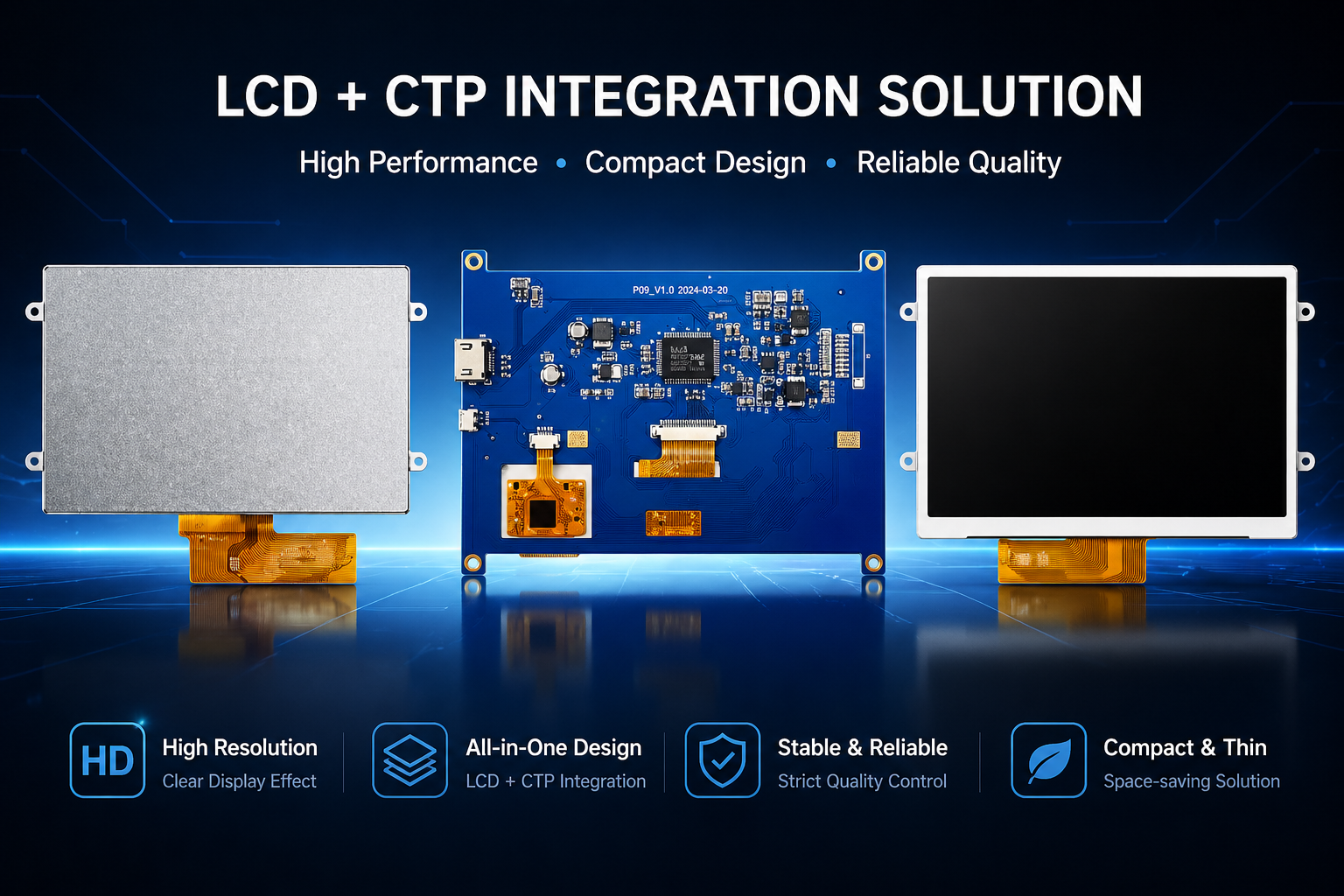
- LCD + TP full lamination
Therefore, a custom-shaped touch screen should not be viewed simply as a glass customization project.
It is a comprehensive engineering project involving mechanical design, optics, touch technology, electrical integration, bonding, and reliability.
DINGTouch: Custom PCAP Touch Screen and Touch Display Solutions
For OEM projects that require custom dimensions, shapes, interfaces, or structures, engineering evaluation is an important first step in custom touch screen development.
DINGTouch provides PCAP capacitive touch screens and integrated touch display solutions for industrial equipment, medical devices, new energy systems, smart terminals, and other embedded applications.
Based on the customer's product structure and operating environment, DINGTouch can support customization of:
- Touch screen dimensions
- Panel shape
- Cover glass
- Touch sensor
- FPC
- Touch controller solution
- Surface treatment
- Bonding structure
- Touch display integration
From project evaluation and engineering design to prototype development and mass production, DINGTouch works with OEM customers to develop touch solutions based on their specific application requirements.
If your product requires a round, ultra-wide, cut-out, irregular-shaped, or otherwise customized PCAP touch screen, you can provide your required dimensions, mechanical drawing, or preliminary specifications for engineering evaluation.
Frequently Asked Questions
Can PCAP touch screens be made in custom shapes?
Yes. PCAP touch screens can be customized into round, oval, ultra-wide, cut-out, and other non-standard shapes. The sensor pattern, FPC, cover glass, and touch controller may need to be customized accordingly.
Can a custom touch screen include holes or cut-outs?
Yes. Custom openings and cut-outs can be incorporated into the cover glass and touch sensor design, depending on the mechanical structure and required touch area.
Can custom-shaped touch screens support glove operation?
Yes. Glove touch can be considered during sensor and controller selection and may require specific touch parameter tuning based on the glove material and thickness.
Can custom PCAP touch screens be optically bonded to an LCD?
Yes. A custom PCAP touch screen can be integrated with an LCD using OCA or other suitable bonding methods, depending on the display structure and application requirements.
What information is needed to develop a custom-shaped touch screen?
Useful information typically includes the required dimensions, mechanical drawing, touch area, display size and resolution, FPC position, interface requirements, operating environment, and expected application volume.
Providing these details at the beginning of the project helps the engineering team evaluate the feasibility and develop an appropriate solution.
CATEGORIES
CONTACT US
Contact: Dingtouch
Phone: +8615815536116
Tel: +8615815536116
Email: sales@szdingtouch.com
Add: Building A, Bailu Plaza, No. 48, Gonghe Industrial Road, Gongle Community, Xixiang Street, Baoan District, Shenzhen,China. 518126
 Dingtouch