News
LED Display Technology Accelerates: How Will 8.6-Generation OLED Impact the Future of Industrial Touch Display?
 LED Display Technology Accelerates: How Will 8.6-Generation OLED Impact the Future of Industrial Touch Display?
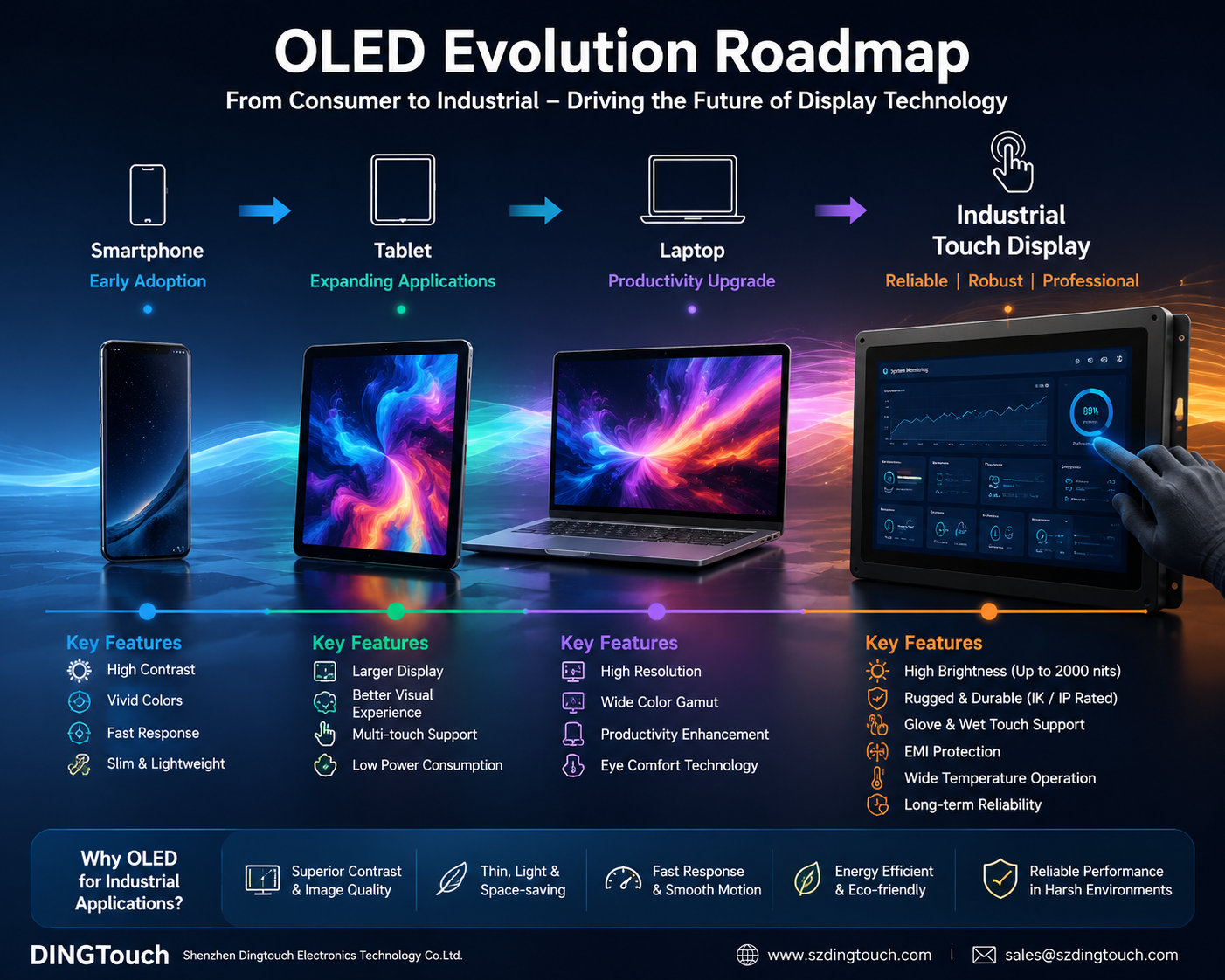
As display technology continues to evolve, OLED is becoming one of the most important technologies shaping the future display industry over the next 5–10 years.
From smartphones and tablets to laptops and professional display systems, OLED adoption is expanding rapidly across different application markets.
Recently, global display manufacturers have accelerated their investment in next-generation OLED technologies, with 8.6-generation OLED production lines becoming a key focus of competition.
For the industrial touch display industry, the development of OLED is not only about improving image quality — it will also drive the evolution of touch displays toward thinner designs, higher performance, and enhanced reliability.
Why Is 8.6-Generation OLED Becoming a Display Industry Focus?
Traditional OLED production has mainly relied on 6th-generation OLED lines, which are widely used for smartphones and other small-size devices.
However, 8.6-generation OLED technology is mainly targeting medium-sized applications, including:
- Tablets
- Laptops
- Professional display equipment
- Smart terminals
Compared with 6th-generation OLED production, 8.6-generation OLED manufacturing can improve production efficiency for larger panels, reduce manufacturing costs, and better support the growing demand for OLED-based IT devices.
Leading display manufacturers, including Samsung Display, BOE, Visionox, and TCL CSOT, have already entered the 8.6-generation OLED development race, accelerating the transition of OLED technology from consumer electronics toward broader professional markets.
What Advantages Will OLED Bring to Future Displays?
1. Higher Contrast and Superior Visual Performance
OLED uses a self-emissive display structure, allowing each pixel to independently control brightness.
Key advantages include:
✔ Deeper blacks
✔ Higher contrast ratio
✔ More vivid colors
✔ Faster response time
For applications such as medical imaging, industrial inspection systems, and advanced control terminals, superior display performance can improve information visibility and operational efficiency.
2. Thinner and Lighter Product Designs
Unlike traditional LCD displays, OLED does not require a conventional backlight module, allowing for a thinner overall structure.
This provides significant advantages for:
- Portable medical devices
- Handheld industrial terminals
- Robot controllers
- Unmanned equipment displays
Future display systems will continue moving toward lighter, thinner, and more integrated designs.
3. Better Integration with Touch Display Technologies
With the development of Touch & Display Driver Integration (TDDI) technology, display and touch functions are becoming increasingly integrated.
Future touch display solutions will focus on:
- Ultra-thin structures
- Lower power consumption
- Faster response
- Higher reliability
Industrial applications will also benefit from more integrated and compact touch display modules.

What Challenges Does OLED Face in Industrial Applications?
Although OLED offers outstanding visual performance, industrial environments are much more demanding than consumer electronics.
Industrial touch displays must handle:
Harsh Operating Conditions
Including:
- Long-term continuous operation
- Wide temperature environments
- Electromagnetic interference
- Outdoor sunlight exposure
- Liquid contamination
Advanced Touch Reliability Requirements
Industrial users require more than simple touch functionality.
Future industrial touchscreen need to support:
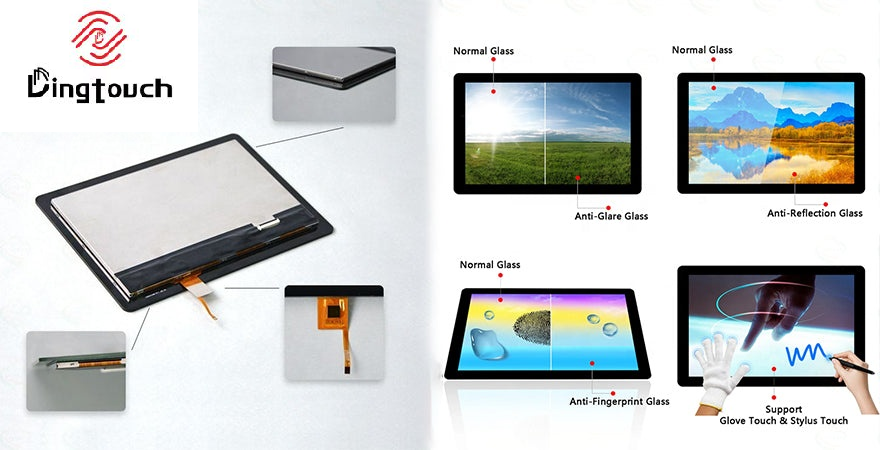
✔ Glove operation
✔ Wet finger touch
✔ Multi-touch interaction
✔ Strong EMI resistance
Rugged Mechanical Protection
Many industrial and medical applications require:
- Scratch-resistant cover glass
- IK-rated impact protection
- IP65/IP67 protection
- Optical bonding technology
Therefore, the future success of OLED in industrial markets depends on combining advanced display technology with reliable touch solutions.
Future Trends of Industrial Touch Displays
1. High-Performance Displays Will Become Standard
Industrial display requirements are rapidly evolving from basic visualization toward:
High brightness + High contrast + High reliability
Future solutions will include:
- Advanced IPS LCD
- OLED
- Mini LED
- High-brightness outdoor displays
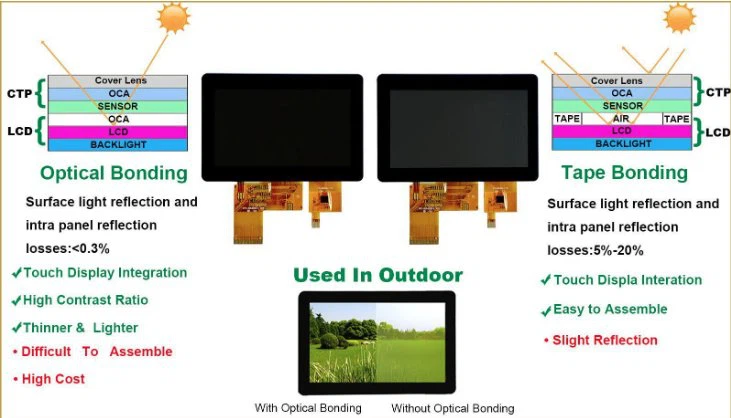
2. Optical Bonding Will Become the Preferred Solution
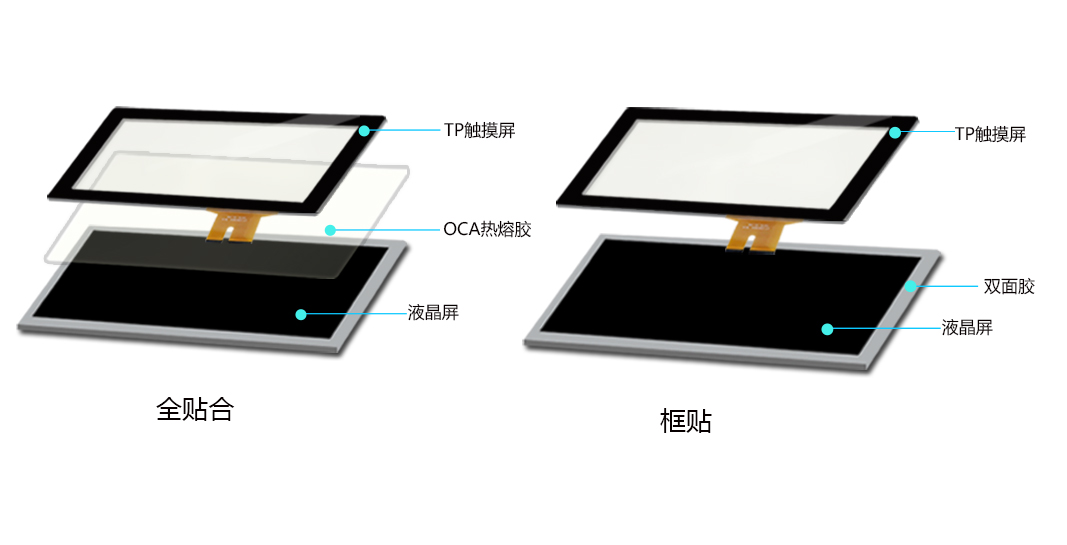
Traditional air-bonded displays often suffer from:
- Reflections
- Dust contamination
- Touch parallax
- Reduced outdoor visibility
Optical bonding integrates:
Cover Glass
↓
OCA/OCR Optical Bonding
↓
Touch Sensor
↓
LCD/OLED Display
Benefits include:
✔ Higher light transmission
✔ Reduced reflection
✔ Better impact resistance
✔ Improved product reliability
3. Industrial PCAP Touch Technology Continues to Advance
The future of industrial touchscreen is not simply about “touch capability”.
Customers increasingly require:
- Thick glove operation
- Wet touch tracking
- EMI protection
- Multi-touch capability
- Long service life
Next-generation PCAP touch technology will become a key human-machine interface solution for:
- Medical equipment
- Industrial automation
- Robotics
- Energy systems
- Smart terminals
How DINGTouch Supports Next-Generation Industrial Touch Display Applications
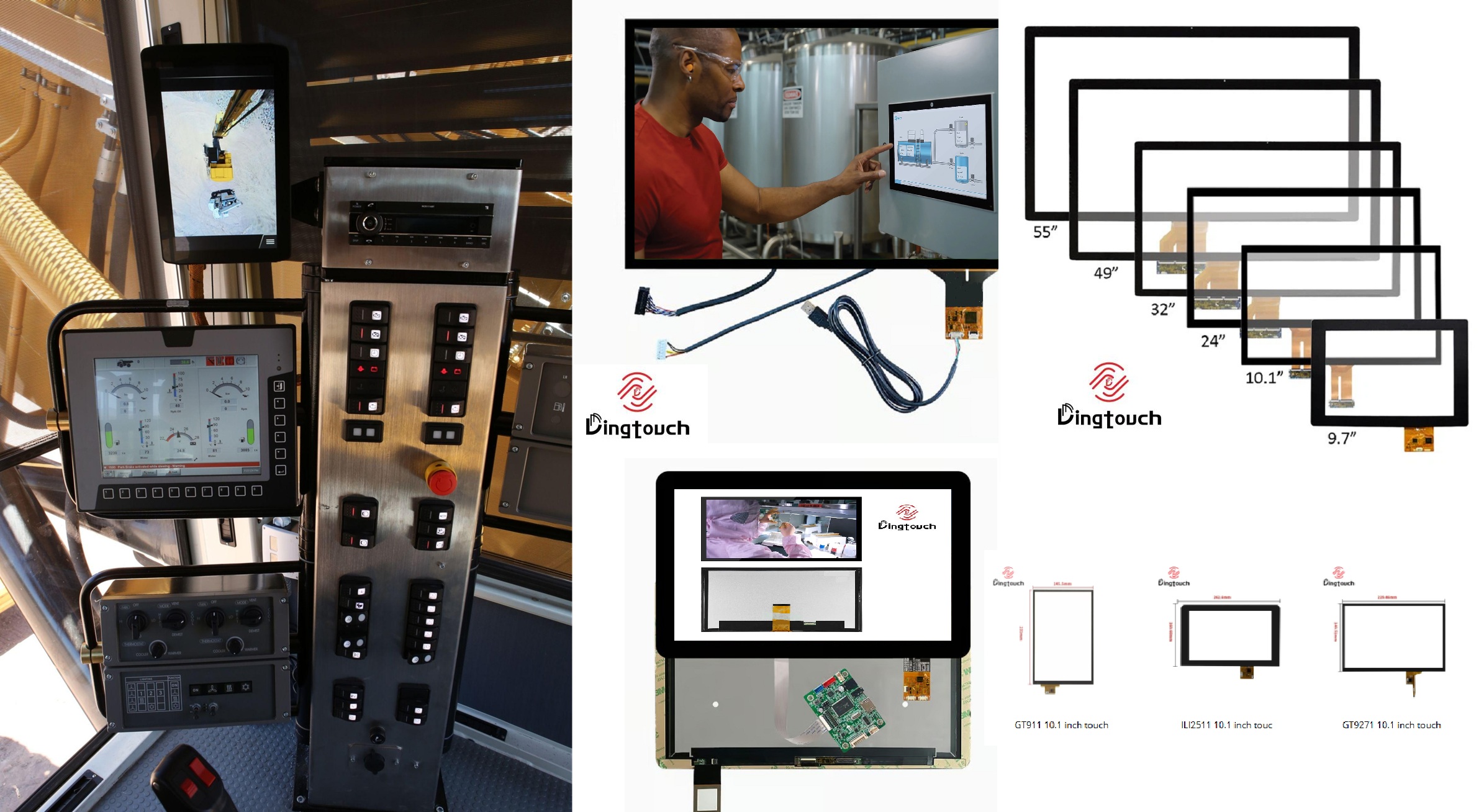
As a professional industrial touch display solution provider, DINGTouch focuses on customized touch display solutions for industrial, medical, outdoor, and smart device applications.
We provide:
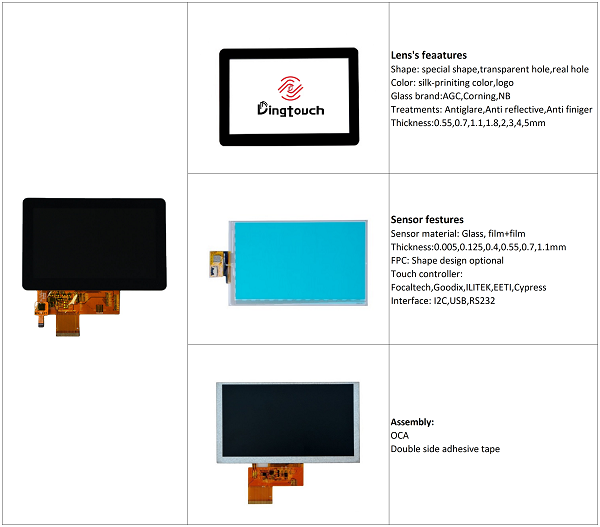
Custom capacitive touch screen Solutions
Supporting:
- 0.96"–65" custom sizes
- PCAP projected capacitive touch technology
- G+G / G+F structures
- USB / I2C / RS232 interfaces
- Goodix, ILITEK, and EETI controller solutions
Integrated Touch Display Solutions
Including:
- TP + LCD modules
- Optical bonding solutions
- High-brightness displays
- IK10 rugged touchscreen
- Medical-grade touch display solutions
By continuously following global display technology trends, DINGTouch combines touch technology, display integration, structural design, and reliability testing to deliver complete human-machine interface solutions for industrial customers.
Conclusion
The competition surrounding 8.6-generation OLED production represents a new stage in the evolution of display technology.
In the coming years, OLED will not only expand in consumer electronics but will also gradually influence professional markets such as industrial control systems, medical equipment, and intelligent terminals.
For industrial touch displays, the future competition will not only depend on display innovation, but on the integration of:
Advanced Display Technology + Reliable Touch Performance + Rugged Industrial Design
DINGTouch will continue monitoring global display technology developments and delivering reliable, high-performance touch display solutions for industrial applications worldwide.

About DINGTouch
Shenzhen Dingtouch Electronics Technology Co.Ltd.
Professional Custom Touch Screen & Touch Display Manufacturer
Custom PCAP Touch Screen | Industrial Touch Display | Optical Bonding Solution
Website: www.szdingtouch.com
Email: sales@szdingtouch.com

CATEGORIES
CONTACT US
Contact: Dingtouch
Phone: +8615815536116
Tel: +8615815536116
Email: sales@szdingtouch.com
Add: Building A, Bailu Plaza, No. 48, Gonghe Industrial Road, Gongle Community, Xixiang Street, Baoan District, Shenzhen,China. 518126
 Dingtouch