News
Why Are Some Displays More Impact-Resistant? 5 Key Factors Behind Rugged Display Design Discover what makes rugged di
Why Are Some Displays More Impact-Resistant? 5 Key Factors Behind Rugged Display Design
In industrial and outdoor applications, displays are rarely protected from the real world.
Unlike consumer displays used mainly in controlled indoor environments, industrial displays may need to withstand vibration, accidental impact, pressure, temperature fluctuations, dust, moisture, and continuous operation.
This raises an important question:
Why are some displays much more resistant to impact than standard displays?
The answer is not simply thicker glass.
A truly rugged display is the result of carefully engineered materials, mechanical structures, bonding technologies, and manufacturing processes. From the front cover glass to the internal mounting structure, every layer can affect the display's ability to withstand mechanical stress.
Let's take a closer look at the key factors that make a display more impact-resistant.
1. Strengthened Cover Glass Provides the First Line of Protection
The cover glass is the first layer exposed to external impact.
Standard displays are generally designed for normal indoor operating conditions. Rugged industrial displays, however, may use strengthened cover glass, thicker glass options, or specially treated protective glass to improve mechanical durability.
A properly engineered cover glass can help resist:
- Accidental impacts
- Scratches and surface wear
- Localized pressure
- Repeated touch operations
- Drops and collisions
- Heavy industrial handling
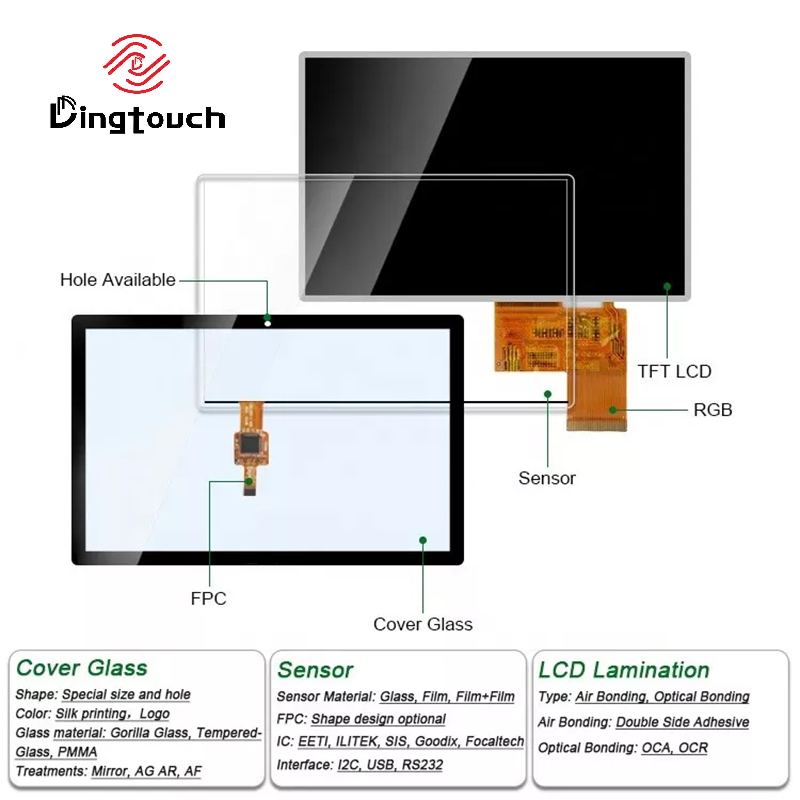
The thickness and material of the glass are important, but they are not the only considerations. Glass strength, shape, mounting method, edge design, and overall structural integration can all influence impact performance.
For applications requiring higher mechanical protection, DINGTouch can also provide customized cover glass solutions based on the equipment's operating environment and installation requirements.
2. Optical Bonding Improves Structural Integrity
Optical bonding is another important technology used in rugged touch displays.
In a conventional display, an air gap may exist between the LCD, touch sensor, and cover glass. Under vibration or mechanical shock, these separate layers can experience relative movement.
Optical bonding eliminates or significantly reduces this air gap by bonding the display layers together using an optical adhesive.
This creates a more integrated display structure and can provide several benefits:
- Improved structural integrity
- Reduced movement between display layers
- Better resistance to vibration and shock
- Reduced risk of internal reflection
- Improved sunlight readability
- Better touch and display integration
Optical bonding is particularly valuable for outdoor equipment, industrial HMIs, vehicle displays, transportation systems, and other applications exposed to vibration or mechanical stress.
It is important to note that optical bonding itself does not automatically make a display “impact-proof.” The final performance depends on the complete module design, materials, bonding process, and mechanical structure.
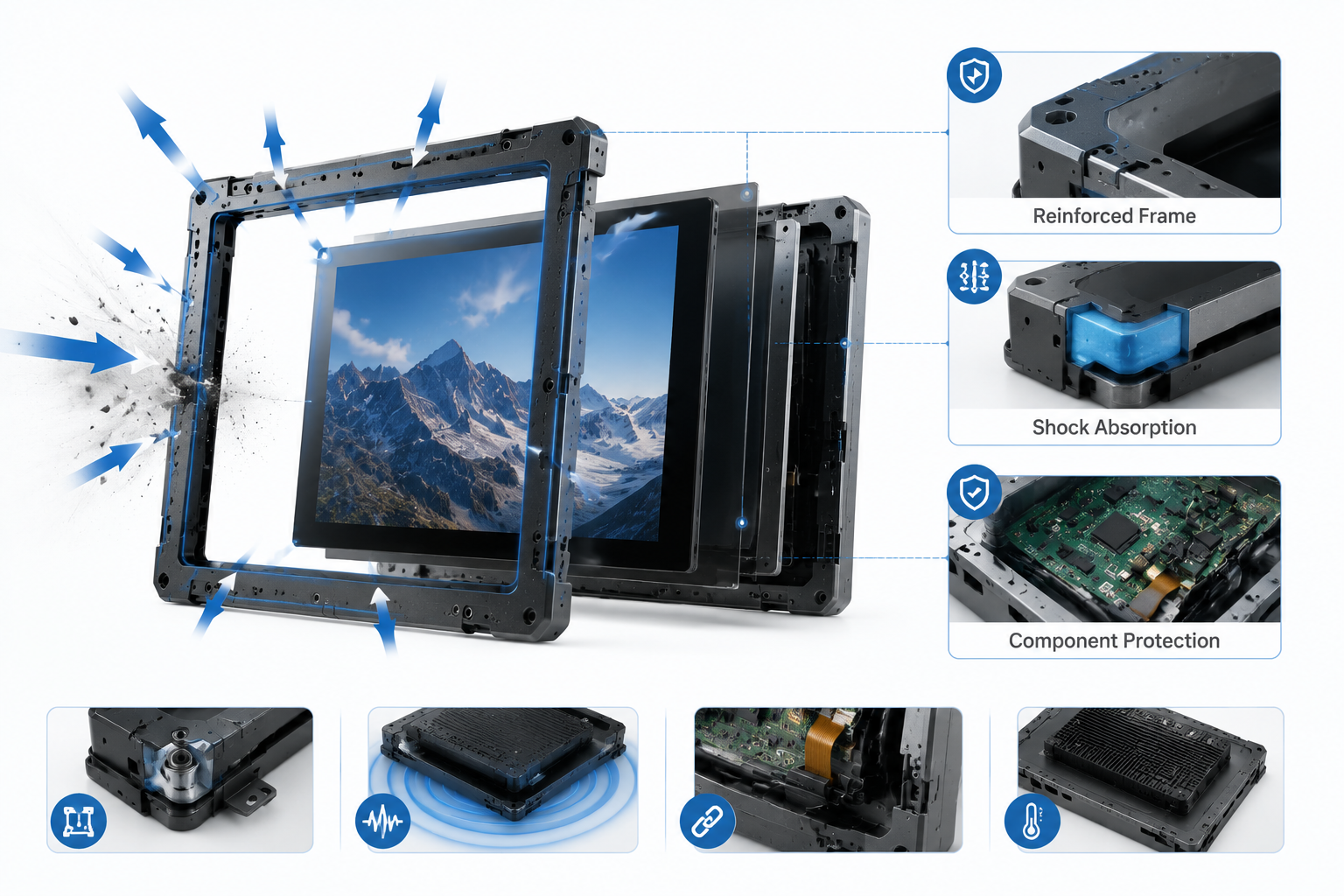
3. Reinforced Mechanical Structure Protects Internal Components
Impact resistance does not depend on the front glass alone.
A rugged display needs a complete mechanical design that protects sensitive internal components from shock and vibration.
Depending on the application, the design may include:
- Reinforced metal or high-strength frames
- Stronger mounting structures
- Shock-absorbing materials
- Optimized internal supports
- Reliable FPC and connector fixation
- Improved component protection
These structural elements help reduce the mechanical stress transferred to critical components such as the LCD panel, touch sensor, driver IC, FPC, and connectors.
For industrial equipment exposed to continuous vibration, the connection between the display module and the host device is especially important.
A strong display therefore requires more than a durable panel—it requires mechanical engineering at the module level.
4. touchscreen Design Also Affects Durability
For modern industrial displays, the touchscreen is an important part of the overall mechanical structure.
A rugged PCAP touch screen may need to maintain reliable touch performance while also withstanding:
- Repeated operation
- Glove touch
- Mechanical pressure
- Vibration
- Moisture
- Contaminants
- Accidental impact
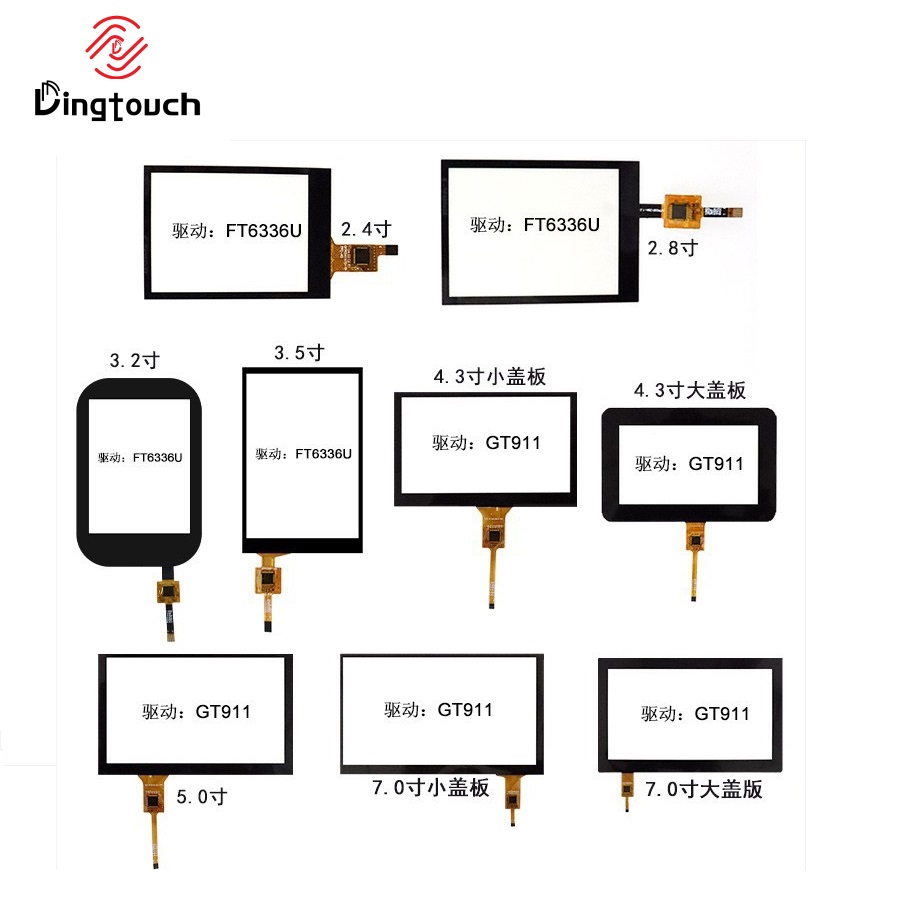
The structure of the touch panel can also be customized according to application requirements.
For example, G+G (Glass + Glass) structures are commonly used where durability and surface strength are important. Cover glass thickness, sensor structure, adhesive selection, and bonding technology can all be optimized for different applications.
For demanding environments, touch solutions can also be combined with optical bonding, waterproof design, EMI shielding, anti-glare coatings, and high-brightness LCDs.
This is why a rugged touch display should be evaluated as a complete touch-display module, rather than simply choosing a stronger piece of glass.
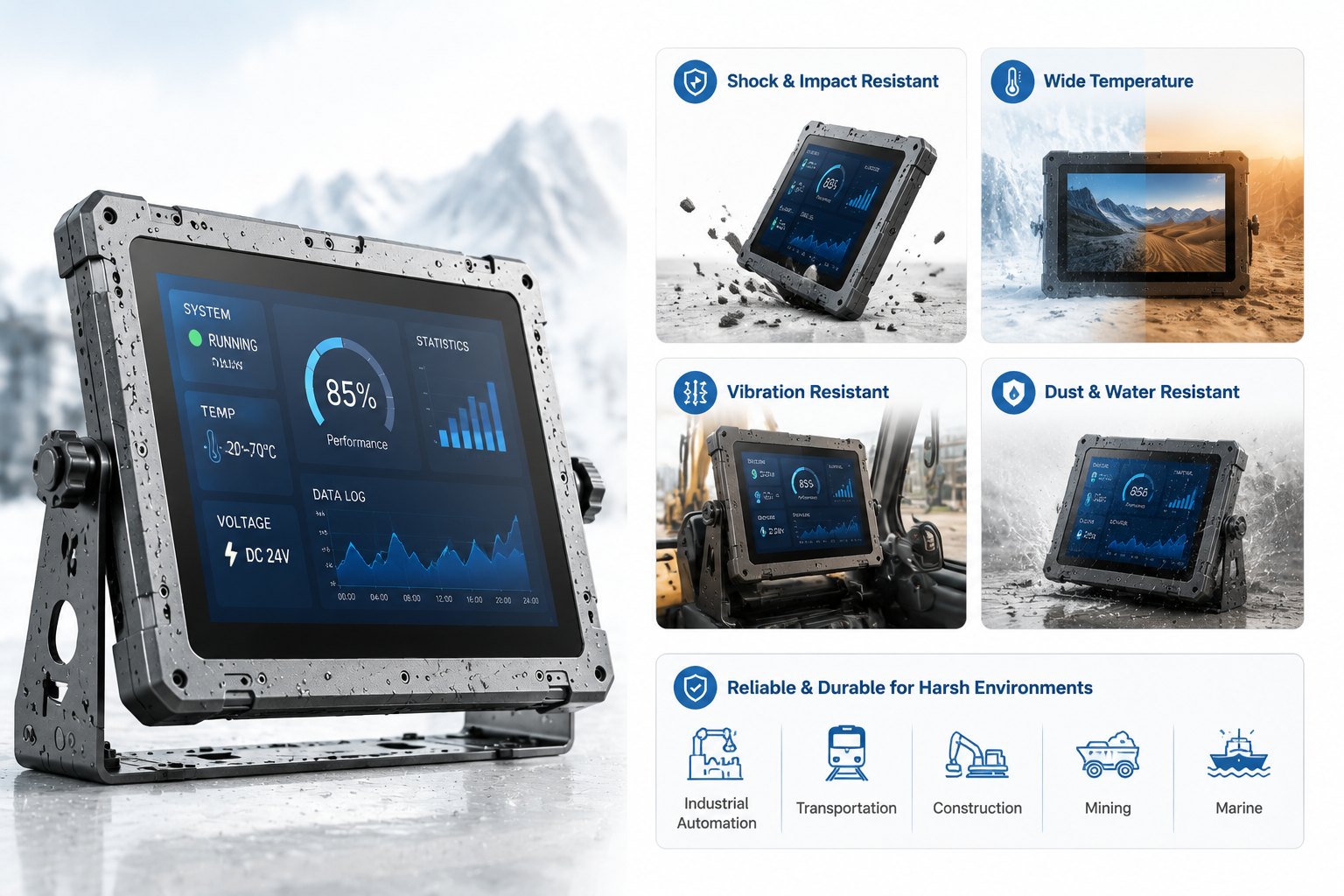
5. Rugged Displays Are Designed for Harsh Operating Environments
Impact resistance is only one part of rugged display performance.
Industrial equipment often operates in environments where multiple challenges occur simultaneously.
For example, an outdoor terminal may need to handle strong sunlight, temperature changes, vibration, dust, moisture, and accidental impact at the same time.
As a result, rugged displays are often designed with a combination of features such as:
Wide Operating Temperature
Displays used in outdoor or industrial equipment may require extended operating temperature ranges to maintain stable performance in both cold and hot environments.
High Brightness
High-brightness LCDs improve readability under direct sunlight and strong ambient lighting.
Vibration Resistance
A reinforced structure and secure internal connections can help maintain display and touch performance under continuous vibration.
Dust and Moisture Protection
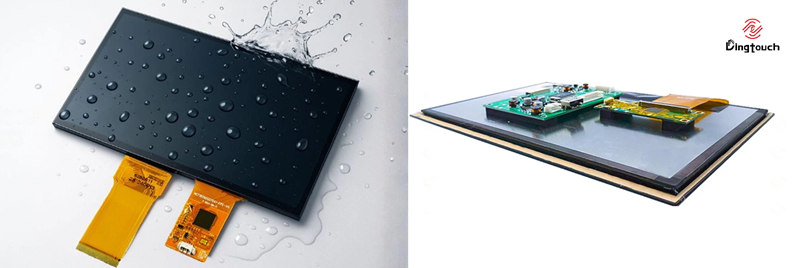
Depending on the equipment design, the display assembly can be engineered with sealing and protection features to help meet specific IP requirements.
Long-Term Reliability
Industrial applications often require displays to operate continuously for years. Component selection, thermal design, bonding quality, and manufacturing consistency therefore become critical.
Rugged Display vs. Standard Display: What's the Difference?
The biggest difference is not necessarily one individual component.
A standard display may be optimized primarily for cost, image quality, size, and normal indoor operation.
A rugged display focuses more heavily on durability, mechanical reliability, environmental resistance, and long-term stability.
| Feature | Standard Display | Rugged Industrial Display |
|---|---|---|
| Cover Glass | Standard | Strengthened / Customized |
| Optical Bonding | Optional | Commonly used |
| Mechanical Structure | Standard | Reinforced |
| Vibration Resistance | Limited | Enhanced |
| Temperature Range | Typical | Wide / Customized |
| Brightness | Standard | High Brightness Options |
| Touch Protection | Standard | Ruggedized Options |
| Environmental Protection | Limited | IP / Customized Options |
| Application | Indoor / General | Industrial / Outdoor / Transportation |
The right solution ultimately depends on the actual operating environment and system requirements.
DINGTouch Rugged Displays: Engineered for Challenging Environments
At DINGTouch, we understand that an industrial display needs to deliver more than excellent image quality.
It needs to remain reliable when exposed to impact, vibration, sunlight, temperature changes, moisture, and continuous operation.
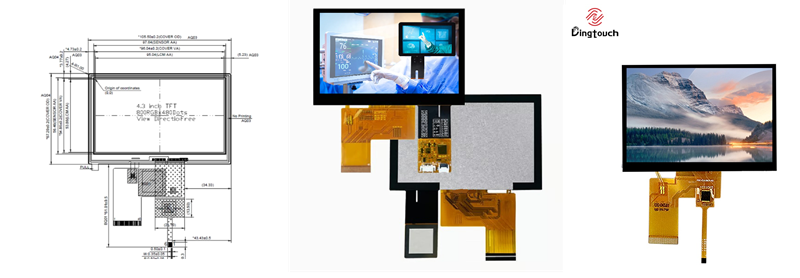
Our rugged display solutions can integrate multiple technologies according to project requirements, including:
- Impact-resistant structural design
- Strengthened and customized cover glass
- Optical bonding technology
- High-brightness LCD solutions
- Wide-temperature operation
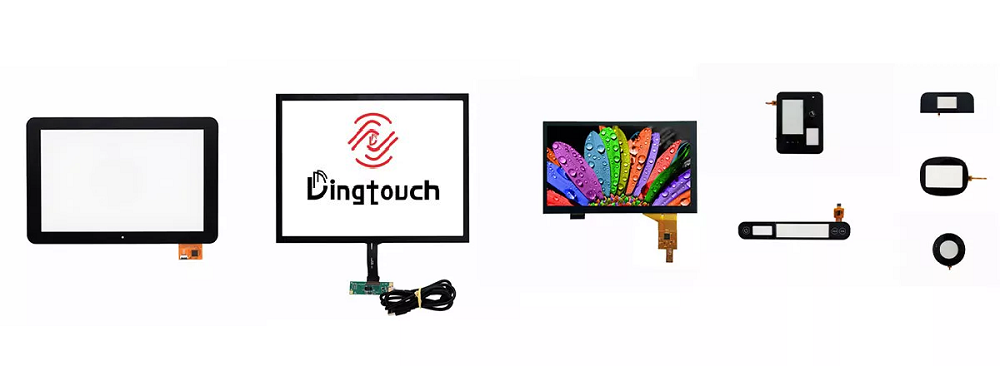
- Industrial PCAP touchscreens
- Waterproof and dust-resistant designs
- EMI shielding solutions
- Customized FPC and mechanical structures
Rather than offering only a standard LCD or touchscreen, DINGTouch can work with customers to develop a complete customized touch display module based on the equipment's mechanical structure, operating environment, and performance requirements.
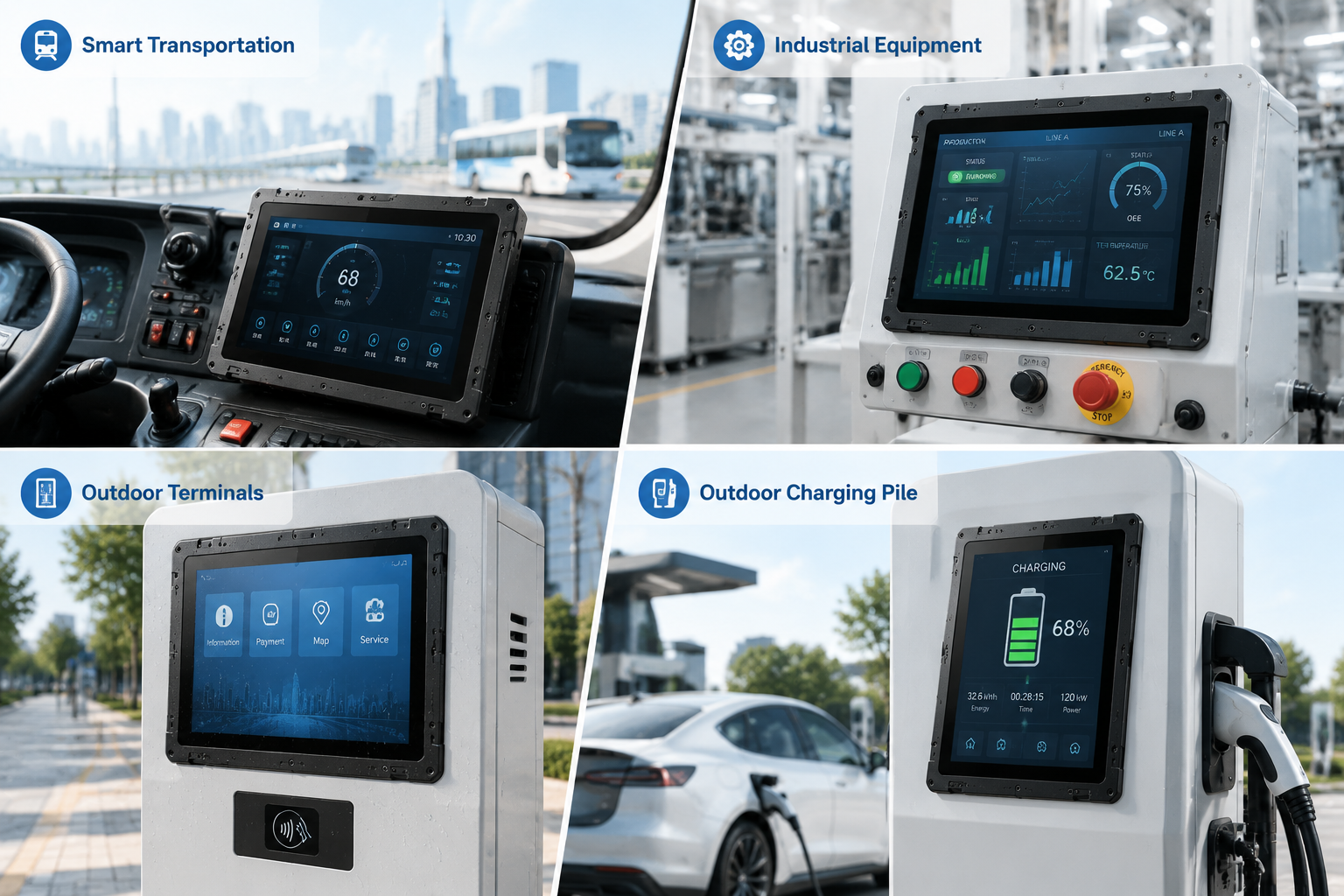
Where Are Rugged Displays Used?
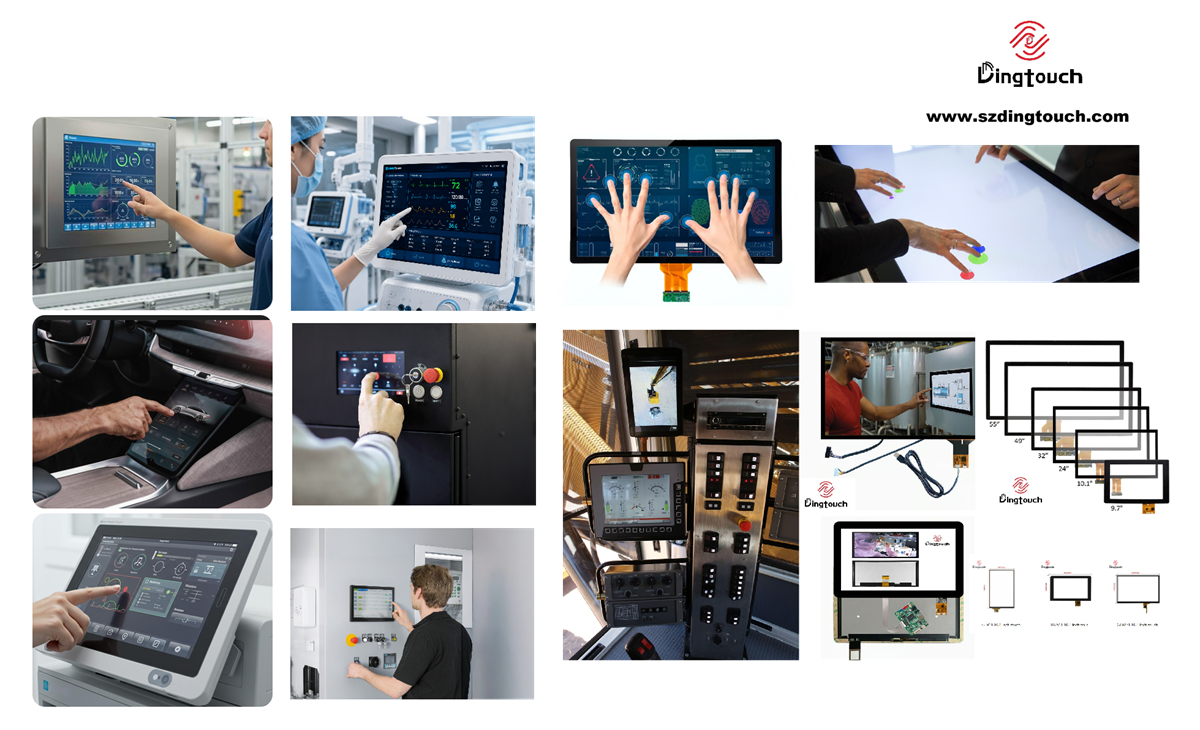
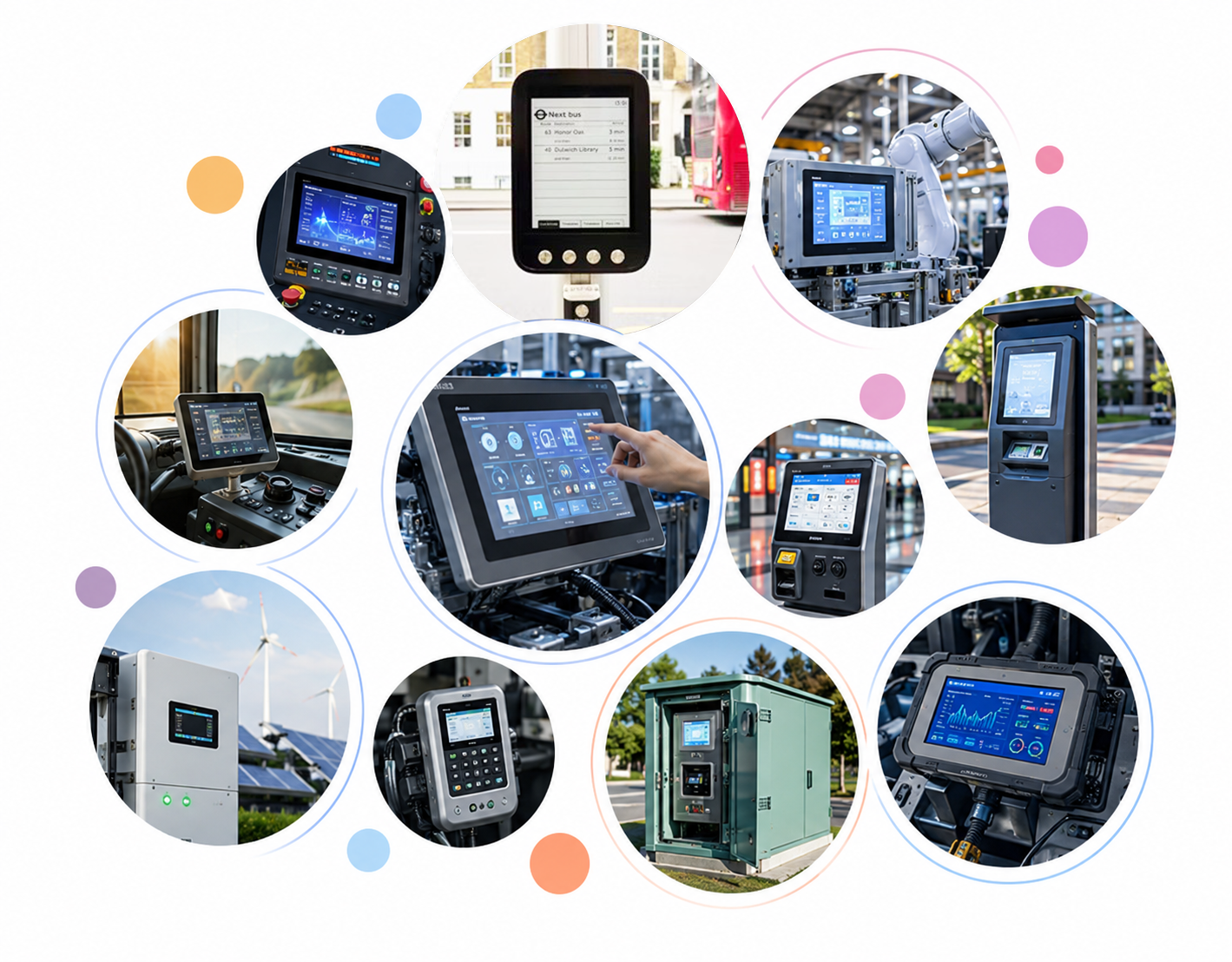
Rugged displays are particularly suitable for applications where display reliability is critical, including:
Smart Transportation
Vehicle dashboards, transportation terminals, fleet management systems, and railway equipment can benefit from displays designed to withstand vibration and environmental changes.
Industrial Automation
Industrial HMIs and control panels require reliable touch operation and stable display performance during long-term operation.
Outdoor Equipment
High-brightness and rugged displays are suitable for outdoor terminals, kiosks, charging stations, and other equipment exposed to sunlight and weather conditions.
Energy and Power Systems
Control equipment used in energy infrastructure may require enhanced mechanical and environmental reliability.
Medical Equipment
Medical devices can require durable touch interfaces that support frequent operation and easy cleaning.
Special-Purpose Equipment
Military, marine, agricultural, construction, and other specialized equipment may require customized rugged display solutions based on specific environmental conditions.
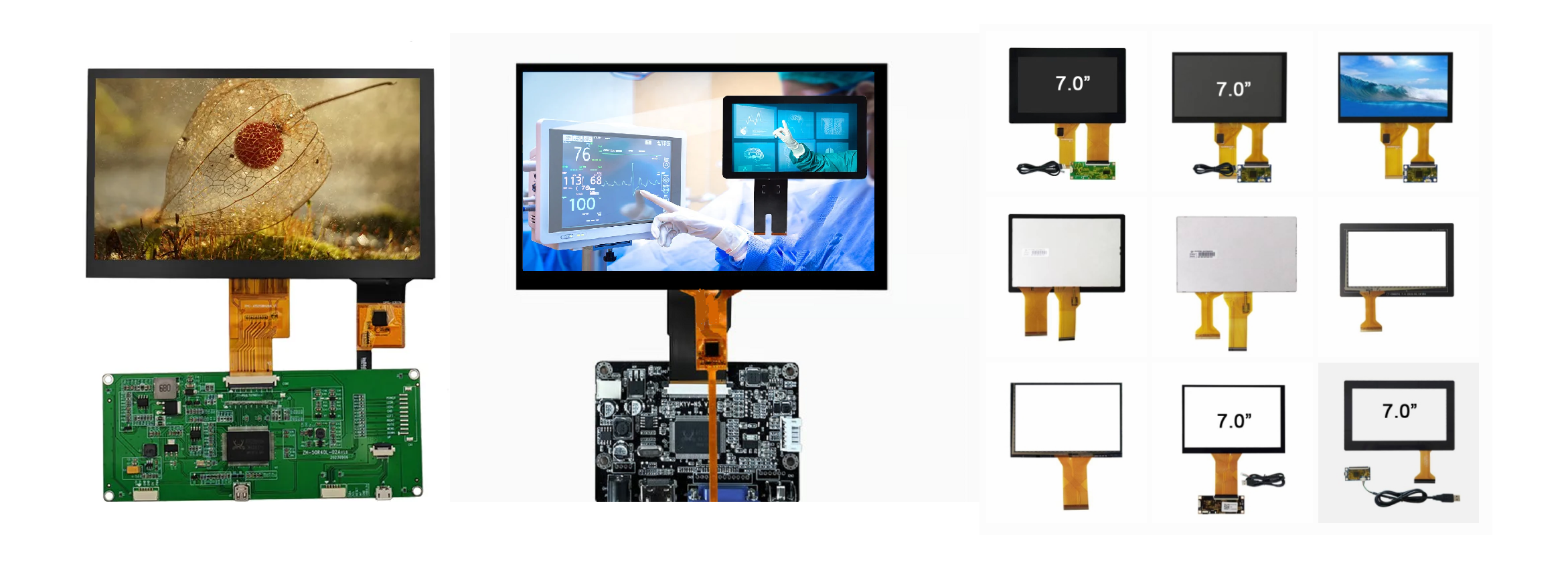
How to Choose the Right Rugged Display?
When selecting a rugged display, don't focus only on glass thickness or impact resistance.
A better approach is to evaluate the complete system:
1. What type of impact will the display experience?
Consider accidental drops, direct impact, pressure, or repeated mechanical stress.
2. Will the equipment experience continuous vibration?
If so, mechanical mounting, internal connections, and optical bonding should be carefully evaluated.
3. What is the operating temperature?
Choose the LCD, touch controller, adhesive materials, and other components according to the actual temperature range.
4. Will the display be used outdoors?
High brightness, anti-glare treatment, optical bonding, and environmental protection may be required.
5. Does the application require touch interaction?
Glove touch, waterproof touch, multi-touch, EMI resistance, and customized touch sensitivity may need to be considered.
6. Are there specific mechanical or installation constraints?
Customized dimensions, FPC routing, mounting holes, connectors, and bezel structures can be designed around the customer's equipment.
The best rugged display is therefore not necessarily the thickest or strongest one.
It is the display properly engineered for its actual operating environment.
Final Thoughts
A display's impact resistance comes from much more than its cover glass.
Strengthened glass, optical bonding, reinforced mechanical structures, rugged touch design, reliable internal connections, and environmental engineering all work together to create a more durable display module.
For industrial and outdoor equipment, choosing the right display early in the product development process can help reduce mechanical failures, improve long-term reliability, and minimize maintenance costs.
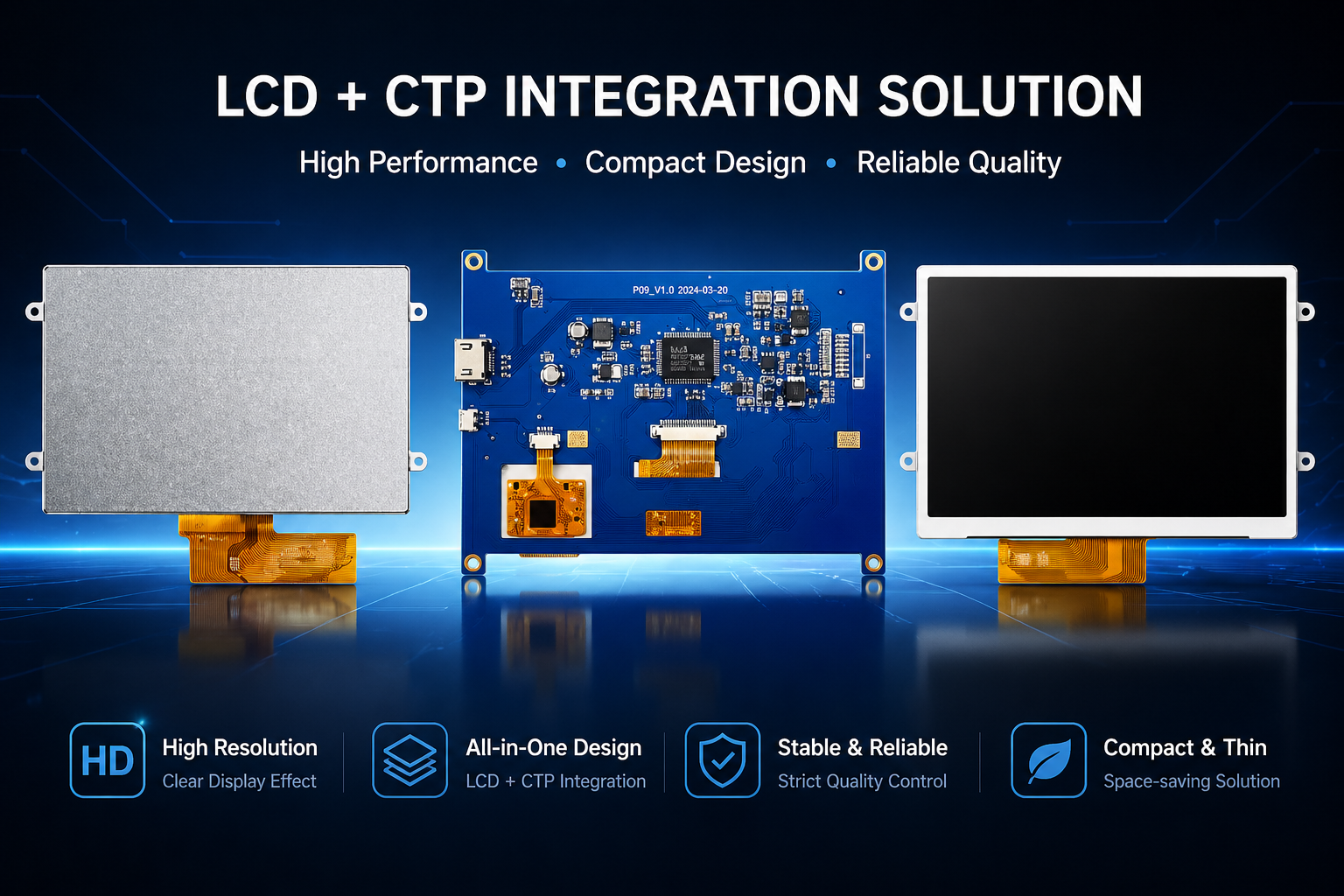
At DINGTouch, we combine LCD, PCAP touch, cover glass, optical bonding, FPC, and mechanical design to develop customized rugged display solutions for demanding applications.
If your project requires an impact-resistant, high-brightness, wide-temperature, waterproof, or customized touch display, DINGTouch can help develop a solution around your equipment requirements.
CATEGORIES
CONTACT US
Contact: Dingtouch
Phone: +8615815536116
Tel: +8615815536116
Email: sales@szdingtouch.com
Add: Building A, Bailu Plaza, No. 48, Gonghe Industrial Road, Gongle Community, Xixiang Street, Baoan District, Shenzhen,China. 518126
 Dingtouch