News
TFT-LCD Display Interface and Backlight Technology Explained: From Image Generation, Timing Control to Brightness Management
TFT-LCD Display Interface and Backlight Technology Explained: From Image Generation, Timing Control to Brightness Management
A Complete Guide to RGB, MIPI, LVDS Interfaces and LED Backlight Driving for Industrial Display Applications
From door entry systems and smart access terminals to industrial HMIs, medical equipment, and smart control panels, almost every intelligent device relies on a display module.
However, during display selection, hardware design, and debugging, engineers often encounter questions such as:
- Why does the display have a backlight but no image?
- Why does a replacement LCD fail even when the connector looks identical?
- How should RGB, MIPI, and LVDS interfaces be selected?
- Why is the backlight brightness unstable?
- Why does PWM dimming sometimes cause flickering?
The working principle of a TFT-LCD display becomes much easier to understand once four key links are clarified:
How images are generated → How TFT controls pixels → How data is transmitted → How the backlight produces illumination
This article explains TFT-LCD technology from six aspects:
LCD imaging principle, TFT active matrix control, display interfaces, RGB timing, LED backlight driving, and engineering design considerations.
 1. How Does a TFT-LCD Create an Image?
LCD Controls Light, While the Backlight Provides Illumination
Many people assume that an LCD panel generates its own light. In reality:
A TFT-LCD does not emit light by itself. It controls how much light passes through the panel.
The actual light source is the backlight unit (BLU).
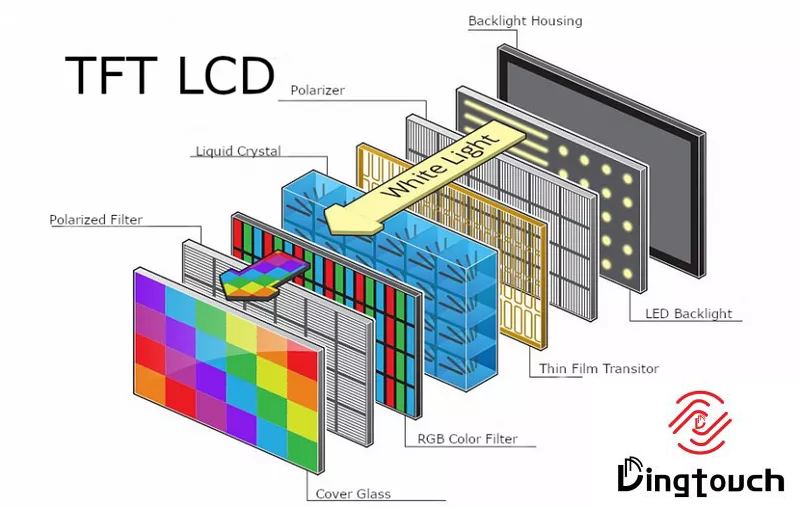
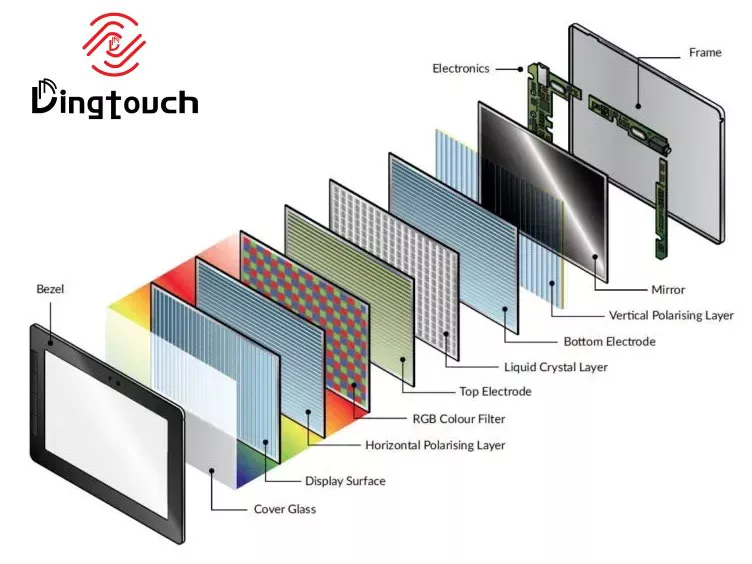
The complete imaging process can be summarized as:
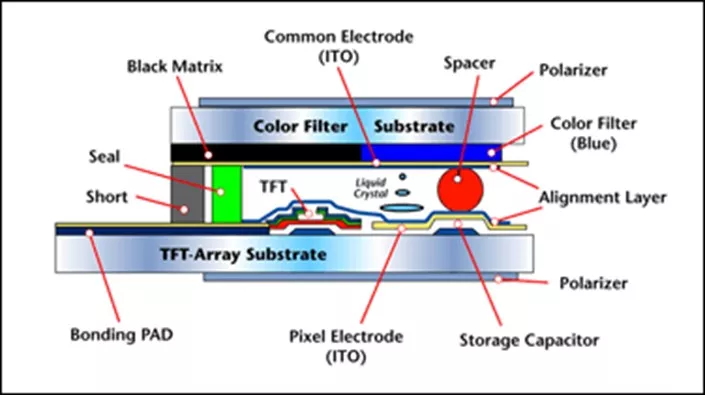
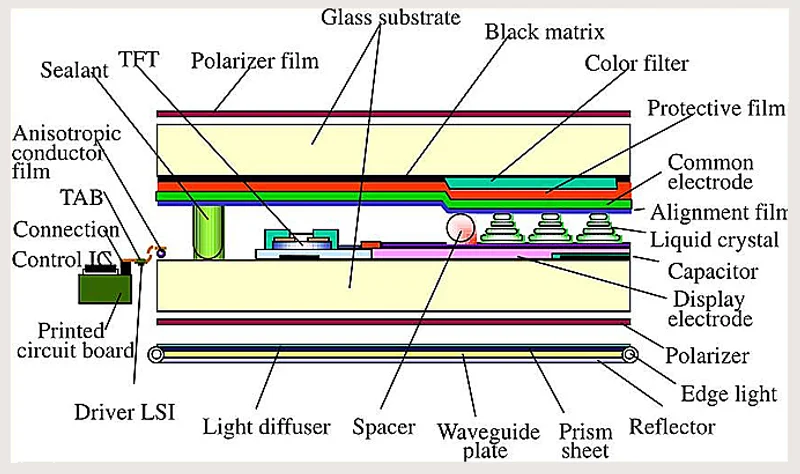
LED Backlight → Polarizer → Liquid Crystal Layer → Color Filter → Polarizer → Human Eye
The process works as follows:
- The LED backlight generates uniform white light.
- The first polarizer aligns the light direction.
- The liquid crystal molecules rotate under an electric field and adjust light transmission.
- The color filter separates light into red, green, and blue components.
- Different RGB brightness combinations create millions of colors.
Each pixel works like a precise optical valve, controlling the amount of light passing through to create different grayscale levels.
2. TFT Active Matrix Technology:
Every Pixel Has Its Own Control Switch
A high-resolution display may contain millions of sub-pixels.
For example:
1920 × 1080 resolution
contains approximately:
2.07 million pixels
Each pixel includes:
- Red sub-pixel (R)
- Green sub-pixel (G)
- Blue sub-pixel (B)
Accurately controlling millions of units requires TFT technology.
TFT stands for:
Thin Film Transistor
Each sub-pixel contains:
- One TFT transistor (switch)
- One storage capacitor
TFT Working Process:
① Gate driver scans each row and activates TFT switches
↓
② Source driver writes image data into pixels
↓
③ Capacitors hold the voltage
↓
④ Liquid crystals adjust light transmission
↓
⑤ A stable image is created
The advantages of TFT active matrix technology:
✅ Independent pixel control
✅ Fast response time
✅ Stable image quality
✅ Supports high-resolution displays
This is why TFT-LCD remains one of the most widely used technologies for industrial displays.
 3. TFT-LCD Display Interfaces Explained:
RGB, MIPI, LVDS, and SPI Selection Guide
The host processor transfers image data to the LCD through a display interface.
Common interfaces include:
RGB Interface — Classic Parallel Display Solution
RGB interface directly transfers:
- RGB pixel data
- Pixel Clock
- HSYNC
- VSYNC
- DE signals
Advantages:
✅ Simple structure
✅ Low latency
✅ Easy debugging
Typical applications:
- 3.5" to 10.1" displays
- MCU/MPU-based systems
- Industrial control equipment
MIPI DSI Interface — High-Speed Solution for Small Displays
MIPI uses high-speed differential transmission.
Advantages:
✅ High data rate
✅ Fewer signal lines
✅ Better EMI performance
✅ Suitable for high-resolution displays
Typical applications:
- Smart devices
- Industrial HMIs
- Medical equipment
- Portable terminals
LVDS Interface — Stable Solution for Industrial Large Displays
LVDS uses low-voltage differential signaling technology.
Advantages:
✅ Strong anti-interference capability
✅ Reliable long-distance transmission
✅ Mature industrial technology
Common applications:
- 10.4" and larger industrial LCD
- 15.6" displays
- 21.5" industrial monitors
SPI Interface — Low-Cost Small Display Solution
SPI features:
✅ Few signal wires
✅ Low hardware cost
Limitations:
❌ Lower data transmission speed
Typical applications:
- 0.96"–3.5" small displays
- Low-refresh-rate devices
4. RGB Display Timing:
Why Incorrect Parameters Cause Display Problems
RGB interfaces require accurate timing control.
The main timing signals include:
VSYNC (Vertical Synchronization)
Defines the start of each frame.
HSYNC (Horizontal Synchronization)
Defines the start of each line.
DE (Data Enable)
Defines the valid display area.
Pixel Clock
Controls the speed of pixel data transmission.
Additional timing parameters include:
- Front Porch
- Back Porch
- Sync Width
Incorrect timing settings may cause:
❌ Black screen
❌ Image shifting
❌ Flickering
❌ Distorted display
Therefore, during LCD debugging:
Resolution, timing parameters, and signal polarity must exactly match the LCD datasheet.
5. LED Backlight Driving Principle:
Boost Voltage + Constant Current + Dimming Control
The LCD panel controls image information, while the backlight determines:
- Brightness
- Uniformity
- Operating lifetime
1. Why Does the Backlight Need Boost Conversion?
LED are usually connected in series.
Multiple LED:
Series connection → Higher voltage requirement
Therefore, a:
DC-DC Boost Converter
is used to increase input voltage to the required LED driving voltage.
2. Why Is Constant Current Required?
LED brightness mainly depends on current.
Unstable current can cause:
❌ Brightness variation
❌ Color inconsistency
❌ Reduced LED lifetime
Therefore, backlight drivers use:
Constant Current Control Technology
through:
- Current sensing resistor
- Feedback loop
- DC-DC driver IC
to maintain stable LED current.
6. Backlight Dimming Methods:
PWM Dimming vs Analog Dimming
There are two main dimming methods:
PWM Dimming
PWM controls brightness by rapidly switching LEDs ON and OFF.
Higher duty cycle:
→ Higher brightness
Advantages:
✅ Stable LED current
✅ Better color consistency
✅ Higher efficiency
Important:
Low PWM frequency may cause:
- Visible flickering
- Camera scanning stripes
Analog Dimming
Analog dimming directly adjusts LED current.
Advantages:
✅ No visible flicker
Disadvantages:
❌ Color shift at low brightness
❌ Reduced consistency
For industrial applications:
High-frequency PWM dimming is commonly preferred.
7. Complete TFT-LCD System Architecture:
Image Transmission and Backlight Control Are Two Independent Paths
A complete display system contains two separate circuits.
Image Signal Path:
Host MCU / CPU
↓
RGB / MIPI / LVDS Interface
↓
LCD Panel
↓
Image Display
Backlight Path:
Power Supply
↓
LED Driver
↓
LED Backlight
↓
Brightness Generation
Therefore:
"No image" and "No backlight" are completely different problems.
Troubleshooting Guide
| Symptom | Possible Cause |
|---|---|
| Black screen, no light | Backlight driver, power supply, PWM issue |
| Backlight works but no image | Interface, timing, initialization problem |
| Distorted or shifted image | Incorrect RGB timing parameters |
| Unstable brightness | Poor constant-current design |
| Flickering at low brightness | PWM frequency too low |
8. Key Engineering Considerations for Industrial TFT-LCD Design
1. Interface Selection
Choose RGB, MIPI, or LVDS according to:
- Host processor capability
- Display size
- Resolution
- Refresh rate
2. High-Speed Signal Routing
For MIPI/LVDS:
✅ Control differential impedance
✅ Match trace length
✅ Avoid interference sources
✅ Maintain proper grounding
3. EMI Design
Major interference sources:
- Pixel clock
- Backlight PWM
- DC-DC conversion circuits
Recommended solutions:
- Add filtering
- Optimize power design
- Keep away from RF modules
4. Power Sequence Control
Follow LCD specifications for:
- Power-on sequence
- Backlight timing
- Signal initialization
To prevent:
- Display artifacts
- White flashing
- Reduced lifetime
9. One-Sentence Summary of TFT-LCD Technology
LCD controls light transmission to create colors, TFT controls each pixel accurately, interfaces transmit image data, and the backlight provides illumination.
Remember the four key questions:
What creates the image?
→ Liquid crystal + color filter
How are pixels controlled?
→ TFT active matrix
How is data delivered?
→ RGB / MIPI / LVDS
How is brightness generated?
→ LED backlight + constant-current driver
Conclusion: Stable Display Performance Comes From Every Detail
A reliable TFT-LCD display module is not simply connected by a cable and expected to work.
It requires:
- Correct interface matching
- Accurate timing configuration
- Stable backlight driving
- Proper PCB layout
- Effective EMI and ESD protection
For industrial HMI, medical devices, smart terminals, and outdoor equipment, only a complete optimization from display theory, driver design, and mechanical integration can achieve:
High-definition imaging, stable operation, and long-term reliability.
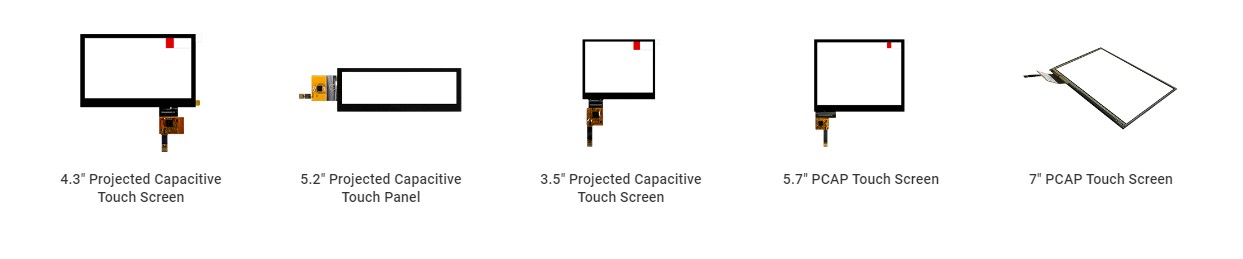
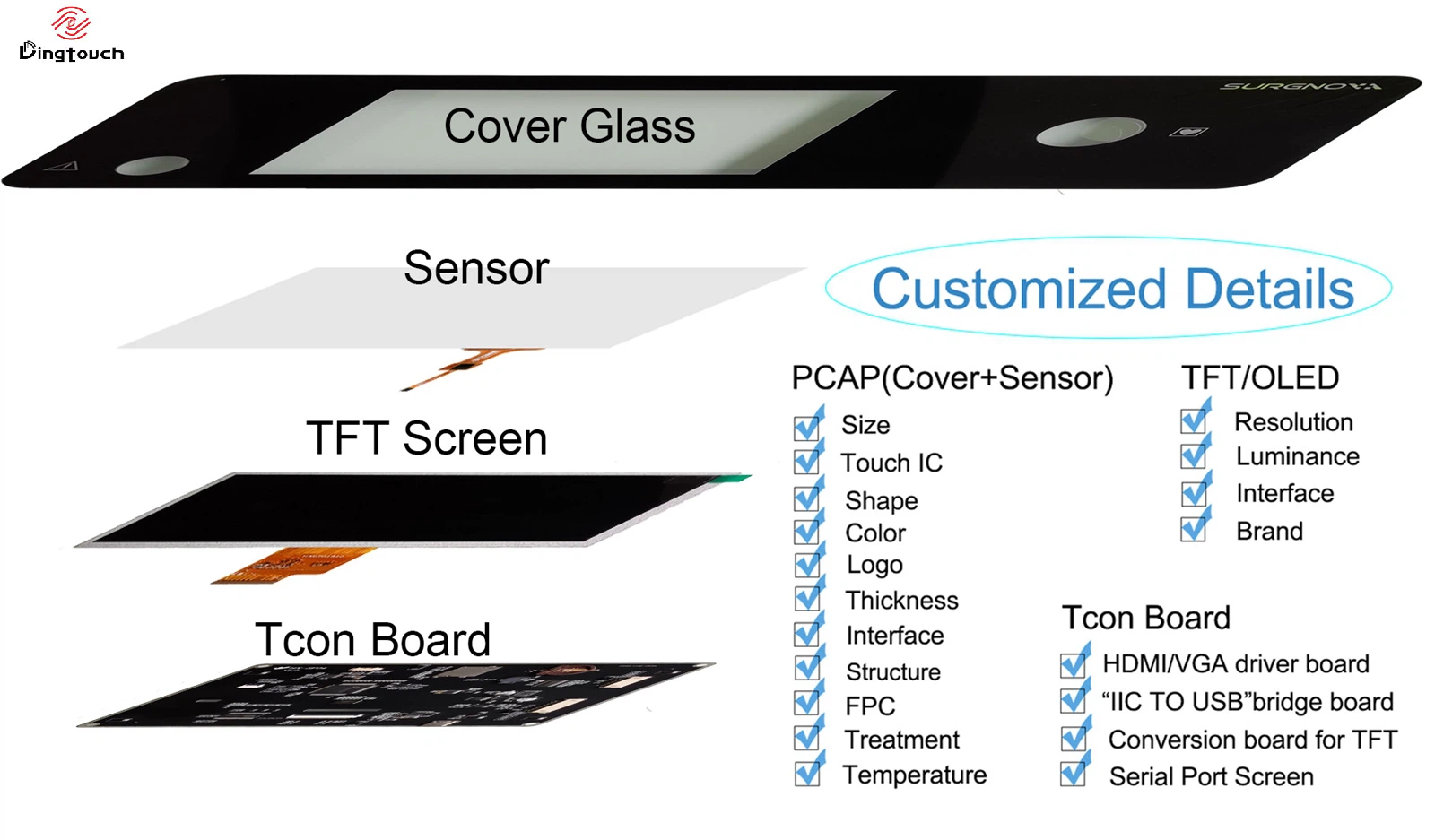
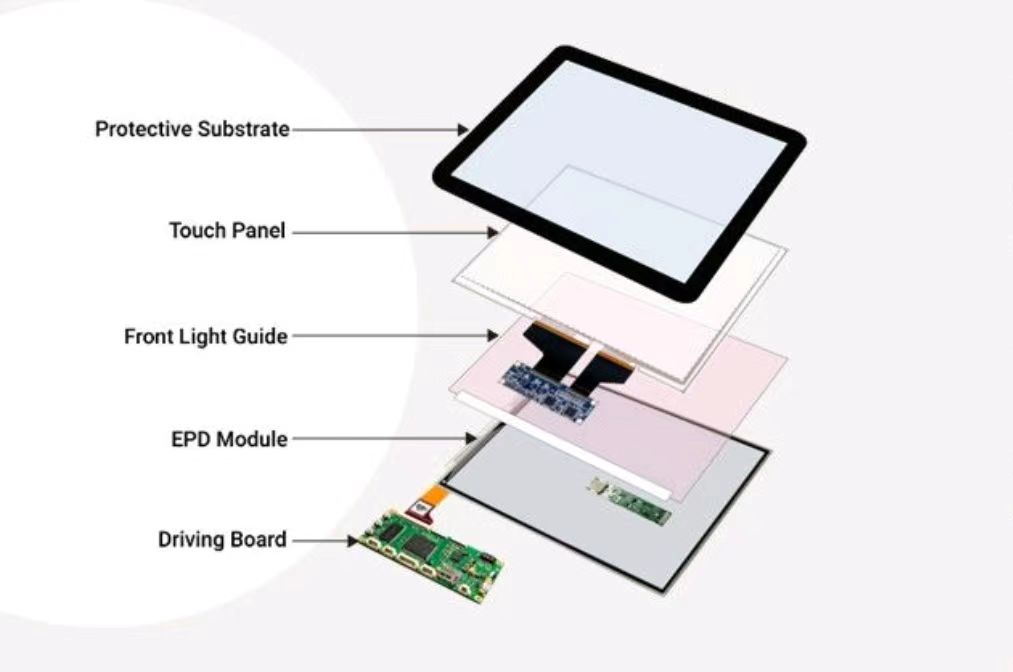
DINGTouch specializes in industrial TFT LCD display modules, PCAP touch screens, and integrated touch display solutions. We provide customized display solutions from 0.96" to 65", supporting RGB, MIPI, LVDS, HDMI, high brightness, wide temperature range, waterproof, and rugged display requirements for industrial applications.
Ready to Build Your Outdoor Display Solution?
Get in touch with us at sales@szdingtouch.com. Our expert engineers will help you design a cost-effective, tailored solution to meet your project’s exact specifications.
DINGTouch:Committed to continuous innovation and improvement of product quality to meet customers' high requirements and expectations.
DINGTouch is a manufacturer that provides high quality touch screen panels. Focus on the design, manufacturing and sales of touch screen panels, and are committed to providing customized solutions that satisfy customers.
DINGTouch: In the process of customizing touch screen panels, we focus on close cooperation and communication with customers. Understanding customers' needs and providing customized solutions will meet customers' individual needs. The company's products are favored by customers for their high quality and reliability, and provide them with the best touchscreen panel solutions.
DINGTouch:Committed to continuous innovation and improvement of product quality to meet customers' high requirements and expectations.
DINGTouch is a manufacturer that provides high quality touch screen panels. Focus on the design, manufacturing and sales of touch screen panels, and are committed to providing customized solutions that satisfy customers.
DINGTouch: In the process of customizing touch screen panels, we focus on close cooperation and communication with customers. Understanding customers' needs and providing customized solutions will meet customers' individual needs. The company's products are favored by customers for their high quality and reliability, and provide them with the best touchscreen panel solutions.
At DINGTOUCH, we are the world's leading touchscreen manufacturer, helping businesses around the world take advantage of this exciting technology. For more information, please visit the home page now.

DINGTouch is a company specializing in the R&D and production of touch screen technology, headquartered in Shenzhen, China. As a professional touch screen supplier, DINGTouch is committed to providing high-quality, stable and reliable touch screen products to meet the diverse needs of customers. We continue to carry out technological innovation and product optimization to ensure that its touch screen products have good sensitivity, accuracy and durability.
In addition to the products themselves, we also focus on cooperation and communication with customers, and are committed to providing customized solutions and excellent after-sales services. Through continuous efforts to improve product quality and customer satisfaction, we have established a good reputation in the touchscreen industry and won widespread market recognition.
In addition to the products themselves, we also focus on cooperation and communication with customers, and are committed to providing customized solutions and excellent after-sales services. Through continuous efforts to improve product quality and customer satisfaction, we have established a good reputation in the touchscreen industry and won widespread market recognition.
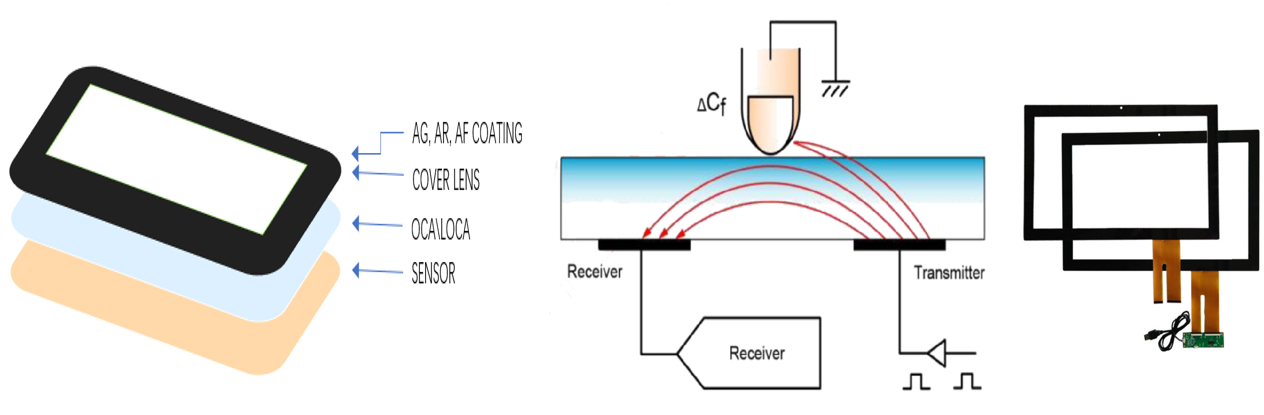
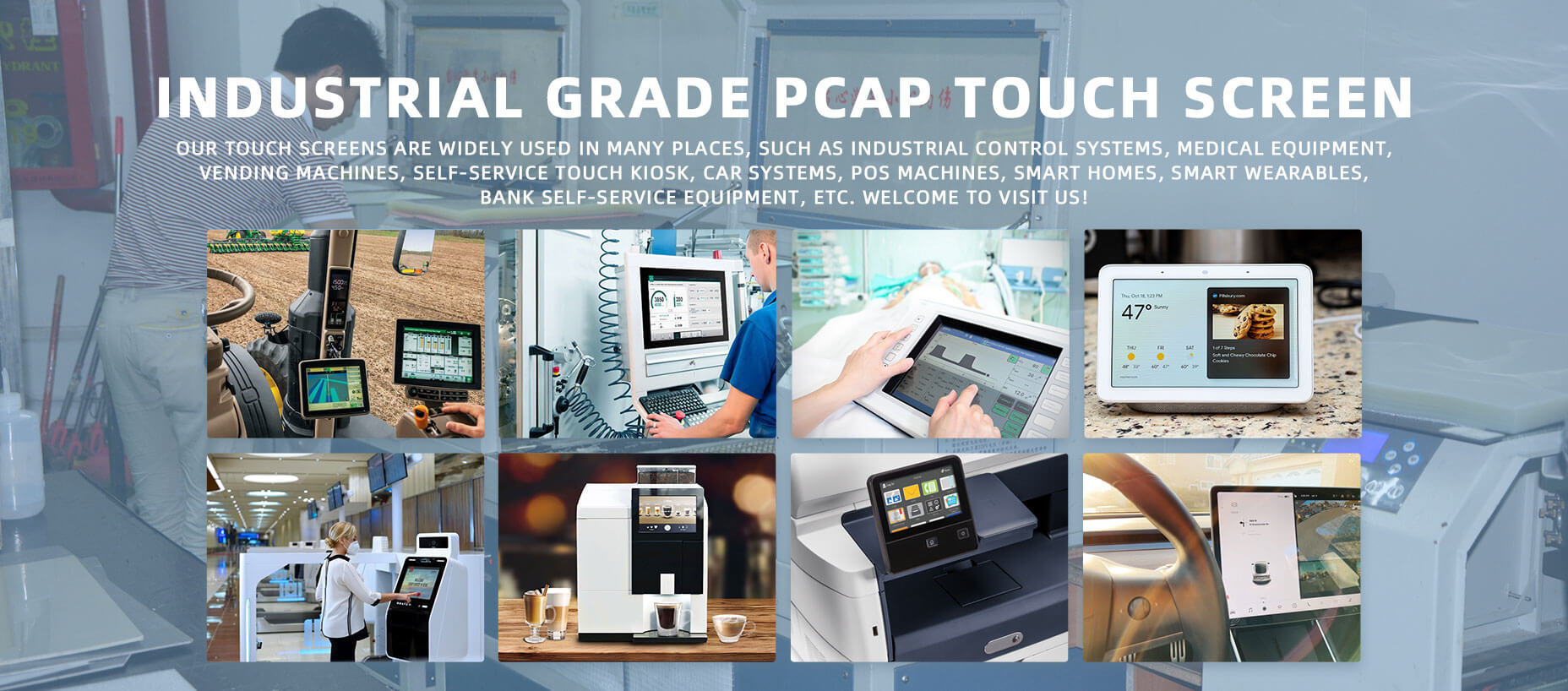
What DINGTOUCH can do:
• PCAP maximum size 65”
• Multi-touch (Touch screen can be customized to your needs.)
• Optical bonding service/air bonding
• LCD interface: HDMI/RGB/MIPI/LVDS/EDP, etc.
• PCAP interface: IIC/USB interface
• CTP can customize the cover glass surface treatment process AG (anti-glare), AR (anti-reflection), AF (anti-fingerprint), waterproof, and glove touch
• Supports 0.55 mm-12 mm coverslip touch.
• Support operating temperature: -40℃-90℃.
Dingtouch Industrial capacitive touch screen Manufacturer
In conclusion, Dingtouch as a professional touch screen manufacturer with more than 10 years touch screen experience.We have many capacitive touch screen . Such as 5 inch touch screen,7 inch touch screen,10.1inch touch screen,15 inch touch screen,15.6 inch touch screen,17 inch touch screen,18.5 inch touch screen,19 inch touch screen,21.5 inch touch screen,32 inch touch screen, However, we also welcome to customize your own touch screen . Contact our team today to learn what capacitive touch screen are best for our retail business needs.
Contact us NOW! sales@szdingtouch.com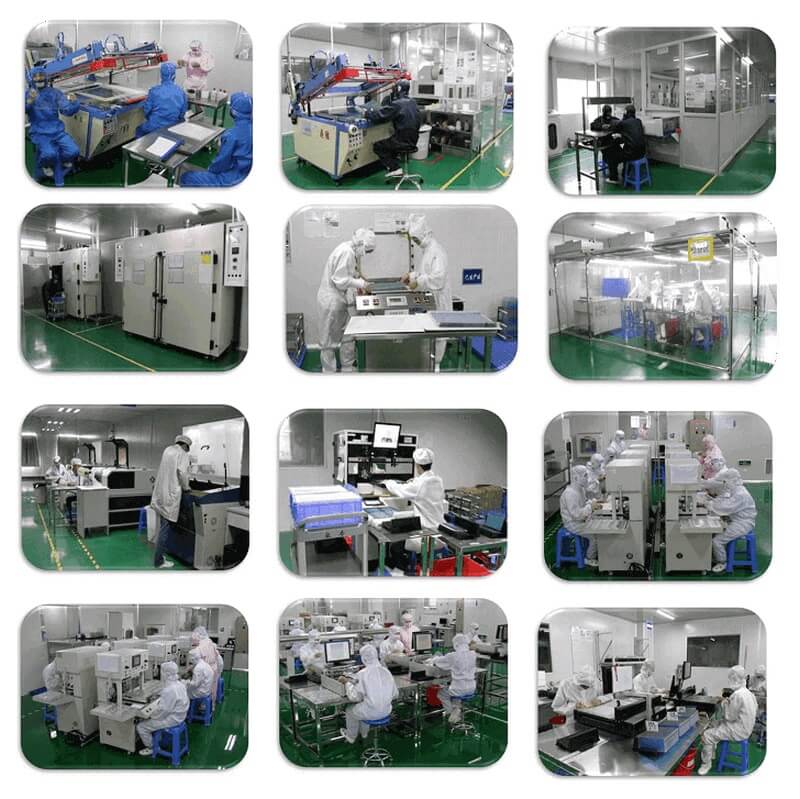
#Medicaltouchscreencalibration, #capacitivetouchcalibrationguide, #IEC60601touchscreen, #DINGTouchmedicaldisplay, #touchscreenaccuracy, #touchscreen driftfix, #medicalequipmenttouchsolutions, #IP65touchpanel, #IK10medicaltouchscreen, #glove touch medical monitor,#ILITEKTouchControllerICSelectionGuide ,#OCAtoOCR #GT911,#CustomizedWideTemperatureTouchScreenSolutions,#Waterproof Touchscreen,
#highbrightnessLCD, #sunlightreadabledisplay,#industrialLCDbacklight, #outdoor displaymodule, #customLCDsolution, #1000–2000nitsdisplay, #DINGTouchtouchscreen.
#capacitivetouchscreen, #EMI/EMCoptimization, #anti-interferencetechnology, #DINGTouch,#customtouchscreensolutions, #industrialtouchdisplay, #medicaltouch screen, #5Gtouchscreen, #AIanti-interferencealgorithm, #smarttouchdisplay,
DINGTouch — Custom Touch Display Solutions Expert
Every touch, clear and precise, ready for any environment.
Every touch, clear and precise, ready for any environment.
CATEGORIES
CONTACT US
Contact: Dingtouch
Phone: +8615815536116
Tel: +8615815536116
Email: sales@szdingtouch.com
Add: Building A, Bailu Plaza, No. 48, Gonghe Industrial Road, Gongle Community, Xixiang Street, Baoan District, Shenzhen,China. 518126
 Dingtouch