News
Beyond the Rectangle: How Mini Round Displays Are Shaping the Next Generation of Humanoid Robots and AI Toys
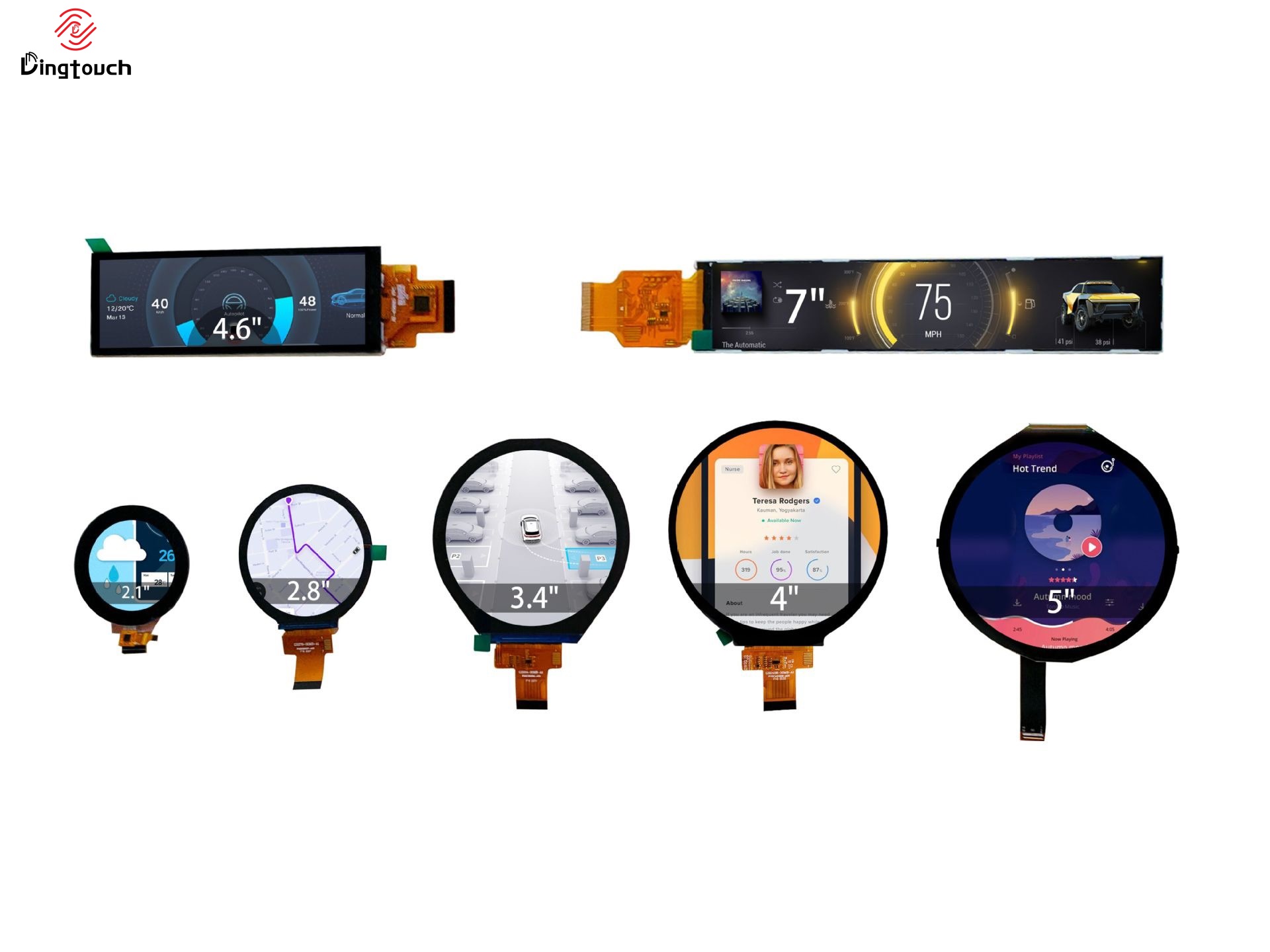 Beyond the Rectangle: How Mini Round Displays Are Shaping the Next Generation of Humanoid Robots and AI Toys
A robot does not need a large screen to communicate.
Sometimes, all it needs is a pair of expressive “eyes.”
As humanoid robots, AI toys, companion robots, and compact smart devices move from concept prototypes toward commercial products, engineers are facing a new display challenge: how to fit a functional, reliable display into an extremely small and unconventional space.
A traditional rectangular LCD may work perfectly well in a tablet, HMI panel, or industrial monitor. But when the display becomes part of a robot's eye, facial expression, wearable device, or miniature control interface, a rectangle is not always the best answer.
This is where mini round LCD displays and circular touch displays are attracting increasing attention.
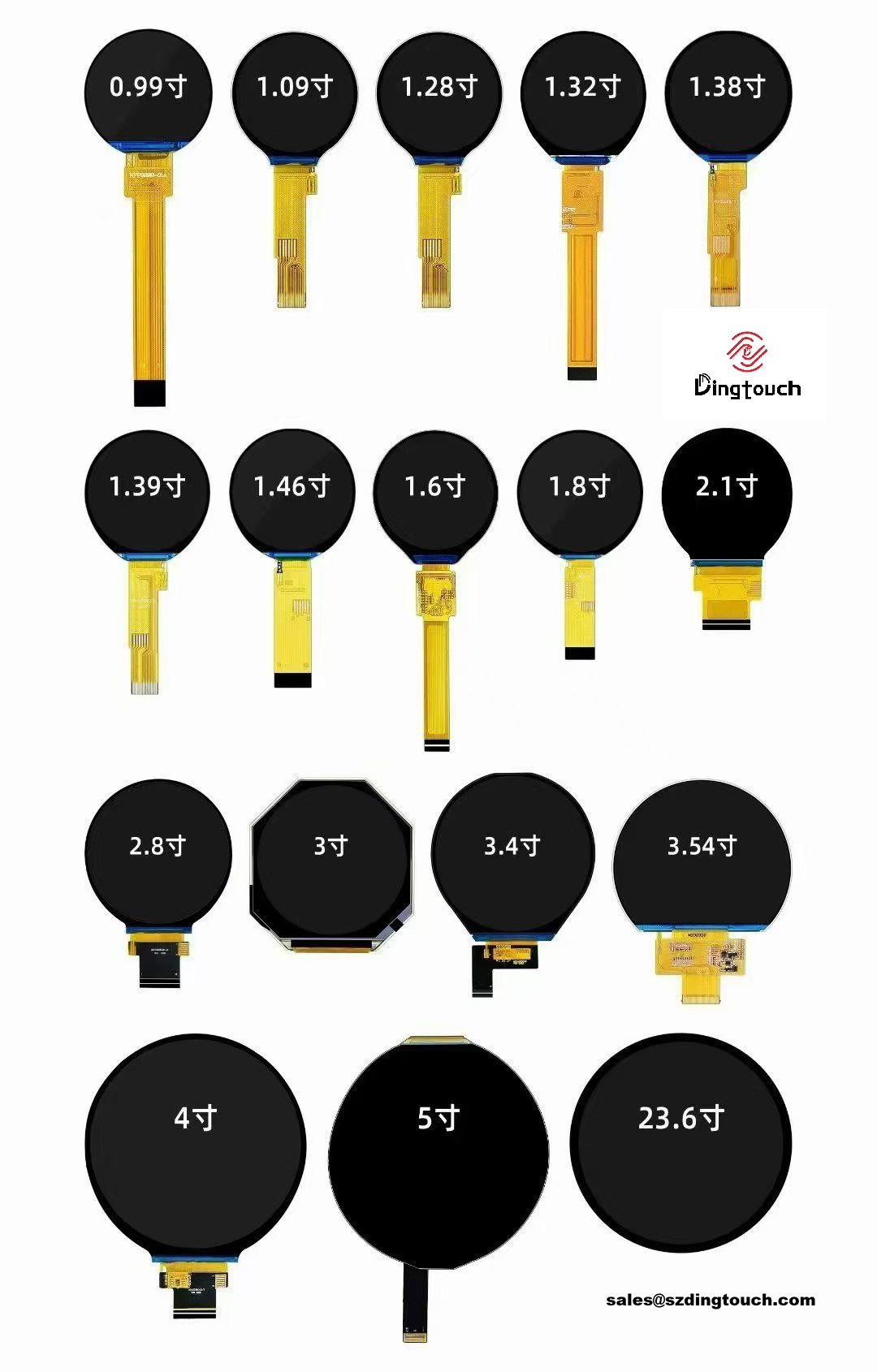
DINGTouch develops compact round LCD and capacitive touch display solutions for robotics, AI toys, smart wearables, medical devices, and other space-constrained products.
Why Are Engineers Moving Beyond Conventional Rectangular Displays?
The display is no longer simply a component placed inside a product.
In many next-generation smart devices, the display becomes part of the product's identity, interaction experience, and mechanical design.
Consider a humanoid robot.
Its eyes may need to display:
- Different pupil shapes
- Animated expressions
- Emotional feedback
- Eye movement
- Device status
- User interaction
- AI-generated visual responses
A small circular display can integrate naturally into this type of design.
Instead of forcing a rectangular screen into a circular mechanical housing, engineers can start with the shape required by the product itself.
The display follows the product design — not the other way around.
Mini Round LCDs as “Digital Eyes” for Humanoid Robots
One of the most interesting applications for miniature circular displays is robotic vision and facial interaction.
A pair of small round LCD modules can function as the visual interface of a robot, creating dynamic digital eyes without requiring a large display area.
The display can show changing graphics, animations, icons, and visual feedback in real time.
For robot manufacturers, this creates several possibilities:
Expressive Robot Faces
Animated eyes can make robots appear more interactive and engaging.
Real-Time AI Feedback
The display can visually communicate what the robot is processing, listening to, or responding to.
Status Indication
Battery level, connection status, operating modes, warnings, and other information can be displayed without adding another interface.
Product Differentiation
A customized eye design can become an important part of a robot's visual identity.
For consumer-facing robots, this is more than a display specification.
It is part of the user experience.
Why 0.71" and 0.99" Can Be More Useful Than a Larger Screen
When designing a humanoid robot or AI toy, bigger is not always better.
Every additional millimeter inside a compact device can affect:
- PCB layout
- Battery capacity
- Mechanical structure
- Cooling
- Motor placement
- Wiring
- Weight
- Product appearance
This is why ultra-small displays can be valuable.
DINGTouch focuses on compact circular LCD solutions, including 0.71-inch and 0.99-inch formats, designed for applications where internal space is limited.
The objective is not simply to make the display smaller.
The real objective is to provide usable display functionality within the smallest practical footprint.
What Engineers Should Consider Before Choosing a Round LCD
Selecting a mini circular display for a robot or AI toy involves more than checking the diagonal size.
Engineers should evaluate the complete display integration.
1. Mechanical Dimensions
The outer diameter, thickness, active area, viewing area, and FPC position must match the mechanical design.
Even a small difference in dimensions can create problems during final assembly.
2. Display Interface
The interface needs to match the customer's mainboard and processor architecture.
A suitable interface and mature driver solution can significantly reduce development work.
3. FPC Design
For miniature devices, the FPC is not an afterthought.
The cable direction, connector location, bending area, and FPC dimensions can directly affect PCB and mechanical design.
DINGTouch can provide compact round LCD modules with gold-plated FPC solutions to facilitate system integration.
4. Brightness and Viewing Environment
A display designed for an indoor AI toy has very different requirements from one used in an outdoor robotic device.
Brightness, viewing angle, contrast, and optical performance should be evaluated according to the final application.
5. Touch Functionality
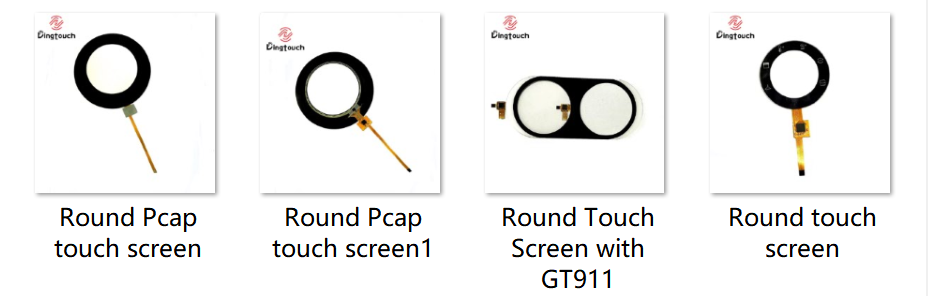
If the product requires direct user interaction, the LCD can be combined with a PCAP capacitive touch panel.
This creates a complete touch display assembly rather than requiring the customer to integrate the LCD and touch sensor separately.
6. Supply and Production Requirements
Prototype development and mass production have different requirements.
A display supplier should be able to support the project from sample validation through production instead of supplying samples only.
From Robot Eyes to AI Toys: Where Can Mini Circular Displays Be Used?
The potential applications extend far beyond humanoid robots.
AI Companion Toys
AI toys increasingly need visual feedback to make conversations and interactions feel more natural.
A small circular display can provide animated eyes, facial expressions, status information, and interactive graphics.
Educational Robots
Mini round displays can be used to create expressive interfaces for STEM robots, educational platforms, and programmable robotic devices.
Smart Wearables
Small circular displays are naturally suited to compact wearable products where both size and appearance matter.
Portable Medical & Healthcare Devices
Compact circular displays can provide visual feedback on portable monitoring, therapy, and healthcare equipment.
Smart Home Devices
Small appliances, smart controllers, and compact interfaces can use circular displays for status indication and user interaction.
Consumer Electronics
The same display architecture can be adapted to many compact products that require a distinctive industrial design.
This cross-application potential is particularly valuable for companies developing multiple products around a common hardware platform.
Why a Complete Touch Display Solution Can Reduce Development Risk
One common challenge in product development is that the LCD supplier and touch panel supplier are separate companies.
This can create additional coordination work.
The customer may need to manage:
- Mechanical compatibility
- FPC routing
- Touch controller compatibility
- Optical performance
- Bonding
- Assembly tolerances
- Quality control
- Multiple supplier schedules
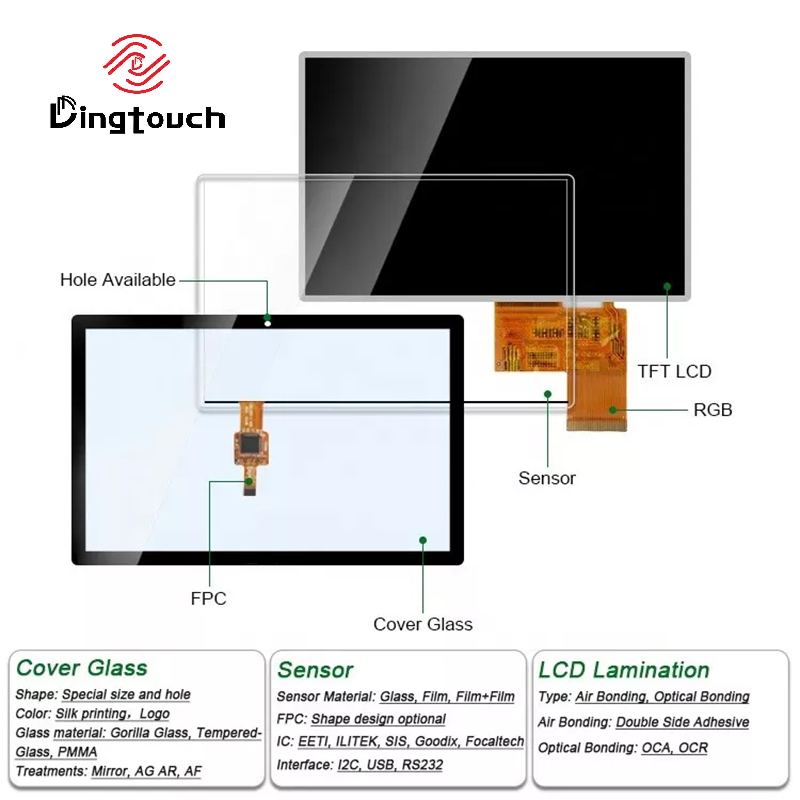
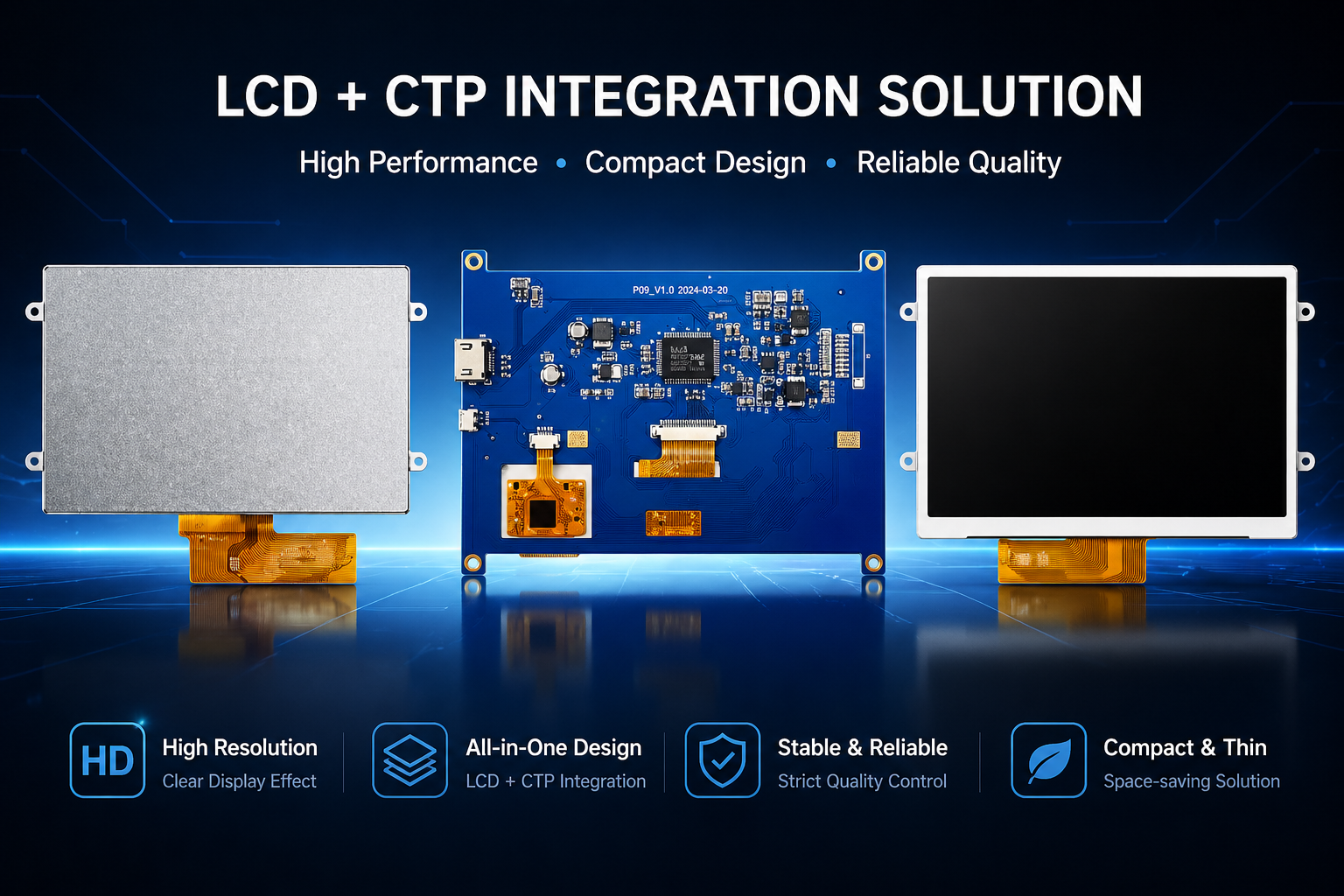
A more integrated approach is to source the LCD + capacitive touch panel as a complete display assembly.
DINGTouch can support customers with both round LCD modules and capacitive touch integration, helping simplify the display supply chain.
For engineering teams, the value is not simply fewer suppliers.
It is fewer integration variables.
From Prototype to Production: What a Display Supplier Should Actually Provide
For robotics and AI hardware, the first prototype is only the beginning.
A reliable display partner should be able to support multiple stages:
Concept → Engineering Sample → Prototype → Design Validation → Pilot Production → Mass Production
At the early stage, engineers may need only a few samples.
Later, they may require design modifications, touch integration, FPC adjustments, or production optimization.
Once the product enters mass production, stable quality and delivery become critical.
DINGTouch supports flexible project development, including small-batch samples and volume production, helping customers transition from initial engineering validation to long-term supply.
 Why DINGTouch Is More Than a Display Supplier
The right display supplier should understand more than LCD specifications.
They should understand how the display fits into the customer's final product.
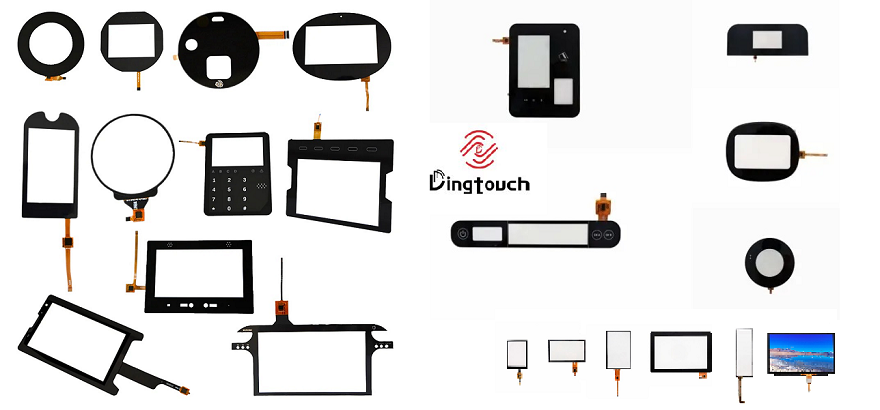
DINGTouch focuses on customized touch display solutions and can support projects involving:
- Mini round LCD displays
- Capacitive touch panels
- LCD + touch display assemblies
- Custom FPC solutions
- Optical bonding
- Industrial-grade touch displays
- High-brightness displays
- Wide-temperature displays
- Customized mechanical structures
This makes it possible to develop the display around the actual product requirements instead of forcing the product to adapt to an off-the-shelf display.
A Better Way to Think About Mini Displays
The future of smart hardware will not be defined by screen size alone.
It will be defined by how intelligently the display fits the product.
For a humanoid robot, that may mean two tiny circular displays functioning as expressive eyes.
For an AI toy, it may mean a miniature animated interface.
For a wearable device, it may mean a circular display that fits naturally into the industrial design.
For a medical device, it may mean a compact screen that provides essential information without increasing the overall size.
The common requirement is simple:
Small footprint. Reliable performance. Flexible integration.
Looking for a Mini Round LCD Manufacturer for Your Next Product?
If you are developing a humanoid robot, AI toy, companion robot, wearable device, medical product, or other compact smart device, the display should be considered early in the product development process.
DINGTouch provides 0.71-inch, 0.99-inch, and customized round LCD display solutions, with optional PCAP capacitive touch integration and engineering support.
Whether you need a few samples for prototype testing or a scalable solution for mass production, our team can help evaluate the display size, interface, FPC structure, touch requirements, and mechanical integration for your project.
Looking for a small round LCD, circular touch display, or custom display solution for your next robot or AI device?
Contact DINGTouch to discuss your requirements and request technical specifications, samples, and a customized display proposal.
DINGTouch — Custom Touch Display Solutions for the Next Generation of Intelligent Devices.
CATEGORIES
CONTACT US
Contact: Dingtouch
Phone: +8615815536116
Tel: +8615815536116
Email: sales@szdingtouch.com
Add: Building A, Bailu Plaza, No. 48, Gonghe Industrial Road, Gongle Community, Xixiang Street, Baoan District, Shenzhen,China. 518126
 Dingtouch