News
How Cover Glass Thickness Affects Touchscreen Performance: An Engineering Guide for Industrial Displays
How Cover Glass Thickness Affects touchscreen Performance: An Engineering Guide for Industrial Displays
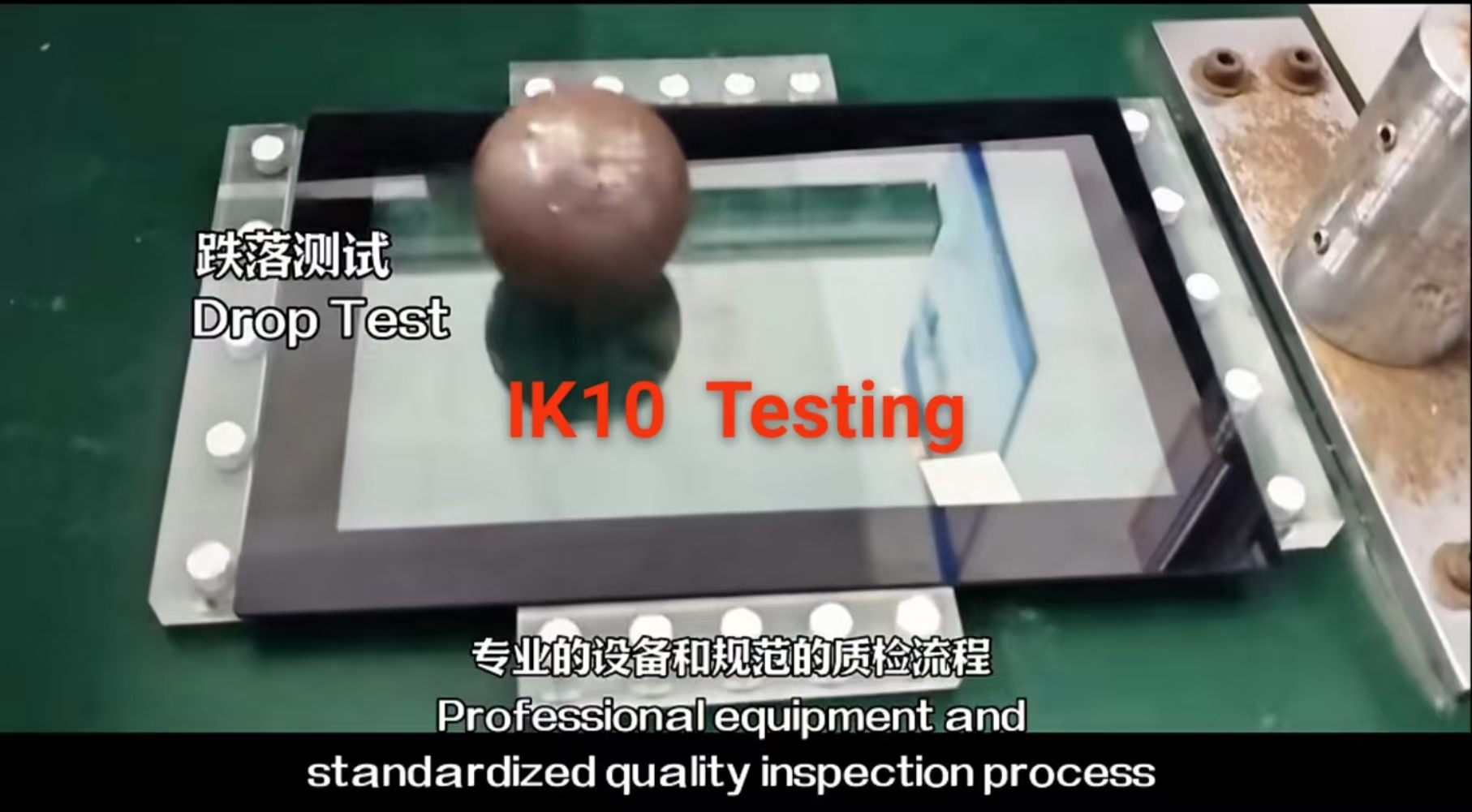
Cover glass plays a critical role in protecting touchscreen displays against impact, scratches, chemicals, frequent cleaning, and everyday wear. In industrial environments, thicker glass is often required to meet mechanical protection requirements and maintain long-term reliability.
However, increasing cover glass thickness introduces an important engineering challenge: the projected capacitive (PCAP) touch sensor must detect finger input through a greater dielectric distance. This can reduce the available touch signal and make reliable detection more difficult, particularly when the display must support glove operation, water exposure, or electrically noisy environments.
Thicker cover glass does not automatically mean poor touch performance. The actual result depends on how the cover glass, touch sensor, controller IC, firmware, display stack, and operating environment work together.
For industrial equipment manufacturers, selecting the right glass thickness is therefore not simply a mechanical design decision. It is a system-level engineering task.
At DINGTouch, we approach custom industrial touch display development by evaluating mechanical protection, touch performance, optical bonding, and application-specific operating conditions as parts of the same solution.
 1. How Does Cover Glass Thickness Affect touchscreen Performance?
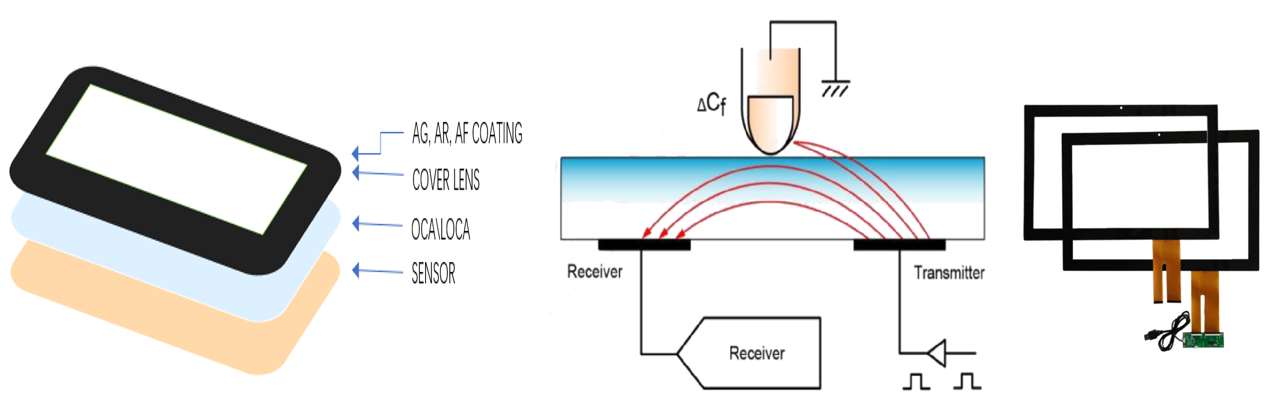
Projected capacitive touchscreens detect changes in the electrical field around sensor electrodes when a conductive object, such as a finger, approaches the screen surface.
A simplified PCAP structure is:
Finger → Cover Glass → Touch Sensor → Touch Controller IC
The cover glass acts as a dielectric layer between the finger and the sensing electrodes. When the glass becomes thicker, the finger is positioned farther from the sensor, which can reduce the strength of the detectable touch signal.
The controller must distinguish these relatively small changes from background electrical noise and normal variations in sensor readings.
As the available signal margin decreases, the system may become more sensitive to factors such as:
-
Touch sensor electrode geometry and layout
-
Controller IC sensitivity and signal-processing capability
-
Electrical noise from the LCD and surrounding electronics
-
Grounding, shielding, and PCB design
-
Firmware configuration and environmental compensation
-
Gloves, moisture, and other operating conditions
The relationship between glass thickness and touch sensitivity is not a simple linear equation. Different sensor architectures and controller configurations can produce significantly different results with the same cover glass.
For this reason, specifying a touchscreen only as having “3 mm cover glass” does not provide enough information to predict its real-world performance.
2. Why Does Thicker Glass Make Capacitive Touch Detection More Challenging?
A touch controller must reliably distinguish intentional finger input from changes caused by electrical noise, environmental interference, and sensor variation.
When a thicker dielectric layer separates the finger from the sensing electrodes, the resulting signal may become weaker. The system must still recognize valid touches without introducing excessive false triggers or missed inputs.
This becomes more challenging when several demanding conditions occur together, including:
-
Glove operation: Gloves introduce an additional insulating layer between the finger and the cover glass.
-
Water exposure: Rain, droplets, condensation, or wet fingers can alter the electrical conditions around the sensor.
-
Electromagnetic interference: Motors, switching power supplies, inverters, and display electronics can introduce electrical noise.
-
Large cover glass: Larger sensing areas may require careful electrode layout and signal optimization.
-
Harsh installation environments: Metal enclosures, grounding arrangements, and nearby electronic components can affect touch performance.
The touch sensor is not simply a passive layer beneath the glass. Its electrode pattern, geometry, and electrical characteristics determine how effectively finger interaction is converted into a measurable signal.
Therefore, cover glass specifications should be evaluated together with the touch sensor architecture rather than selected independently.
3. What Role Does the Touch Controller IC Play?
The touch controller IC processes electrical signals from the sensor and determines whether they represent valid touch events.
When thicker cover glass reduces the available signal, the controller's ability to detect small changes, suppress noise, track baseline conditions, and distinguish multiple touch points becomes particularly important.
Depending on the application, relevant controller capabilities may include:
-
Signal acquisition and processing
-
Noise filtering and interference rejection
-
Baseline tracking and environmental compensation
-
Multi-touch detection
-
Sensitivity and threshold configuration
-
Glove-touch support
-
Water-tolerance algorithms
However, choosing a more sensitive controller does not automatically solve every problem.
The controller can only process the signals provided by the sensor. If the sensor architecture cannot generate a sufficiently reliable signal under the specified conditions, changing the IC alone may not deliver the required result.
For industrial PCAP displays, the cover glass thickness, sensor design, controller IC, and firmware should be selected and tuned as an integrated system.
4. Why Can Two touchscreen with the Same Glass Thickness Perform Differently?
Consider two industrial touch displays, both using 3 mm cover glass.
One provides stable, accurate finger detection, while the other experiences missed touches or inconsistent responsiveness.
This difference does not necessarily indicate that one glass panel is better than the other. The underlying touch architectures may be different.
| Design Element | Impact on Touch Performance |
|---|---|
| Cover glass | Determines the dielectric thickness and surface conditions above the sensor |
| Touch sensor | Converts finger interaction into electrical signals |
| Touch controller IC | Acquires and processes sensor signals |
| Firmware | Controls detection thresholds, filtering, and compensation |
| Touch stack | Defines the physical and electrical relationship between layers |
| System integration | Introduces enclosure, grounding, display noise, and environmental influences |
Even when two modules use similar glass thicknesses, their touch performance may differ because of electrode design, sensor-to-glass spacing, controller configuration, bonding structure, or system-level interference.
This is why industrial display procurement should evaluate the complete touch solution rather than comparing cover glass thickness alone.
5. Balancing Mechanical Protection and Touch Sensitivity
Industrial equipment often has legitimate reasons to use thicker cover glass.
Depending on the application, the display may need to withstand impact, repeated cleaning, abrasion, chemical exposure, or demanding operating conditions. Reducing glass thickness solely to improve touch detection may compromise mechanical protection or fail to meet the product's design requirements.
A more effective engineering approach is to establish the mechanical and touch requirements first, then develop the touch system around them.
For example:
Mechanical requirements
Define the required impact resistance, surface durability, cleaning conditions, and equipment integration constraints.
Touch requirements
Specify finger operation, glove types, multi-touch capability, wet-finger behavior, and required responsiveness.
Touch system configuration
Select an appropriate sensor, controller IC, firmware strategy, and electrical design to support the required glass structure.
System validation
Verify touch performance using the actual cover glass, bonding structure, display, enclosure, and representative operating conditions.
There is no single cover glass thickness that is ideal for every industrial touchscreen. The appropriate design depends on the balance between protection, usability, and the operating environment.
6. How Does the Touch Display Stack Affect Performance?
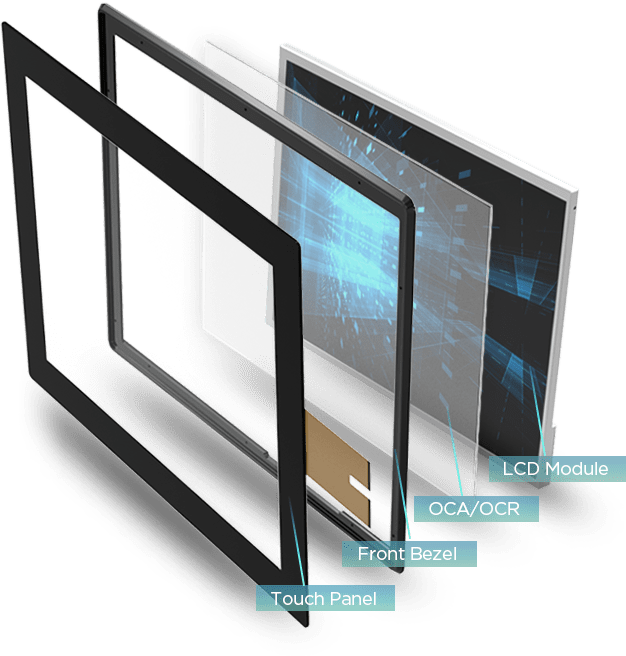
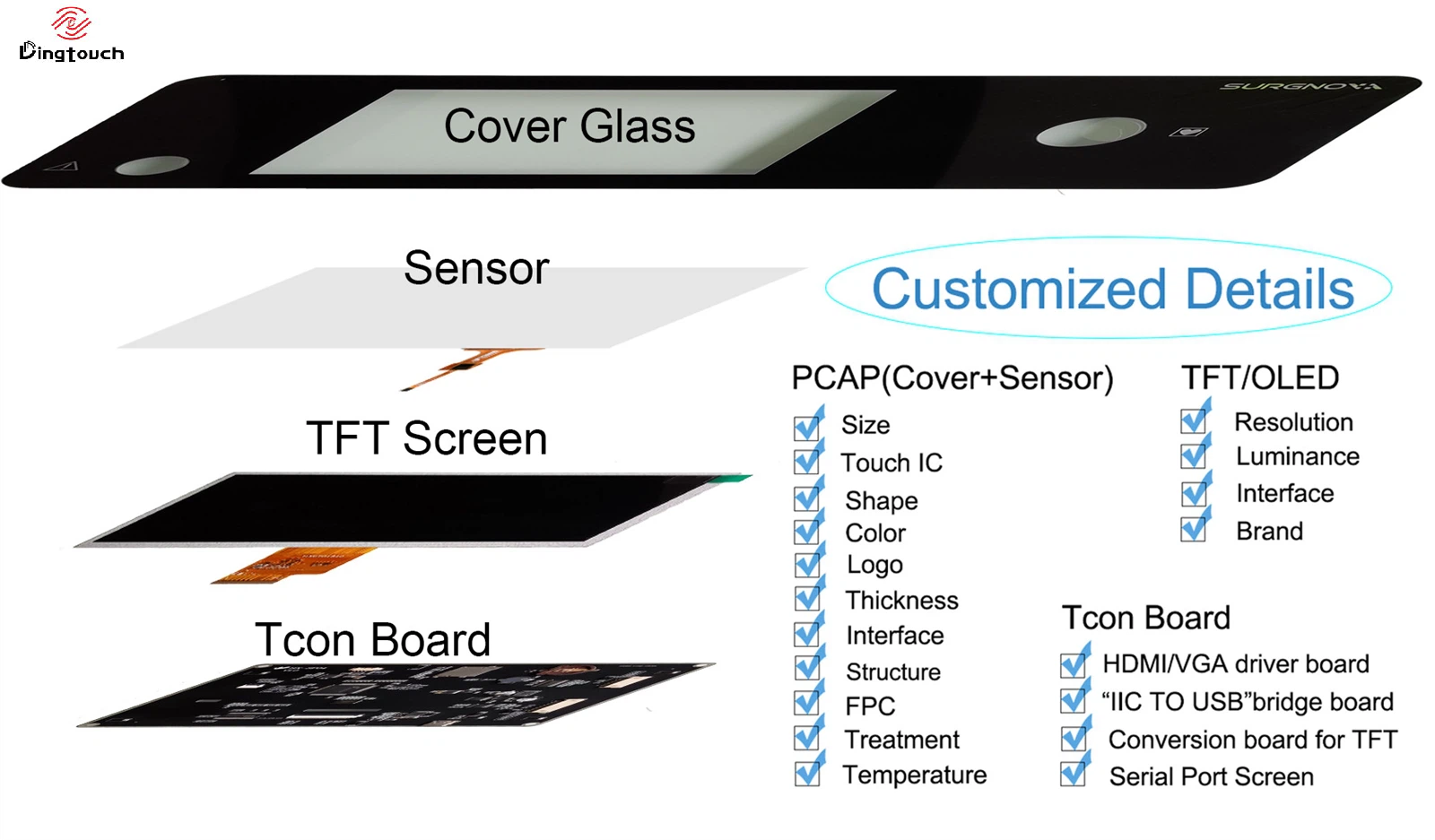
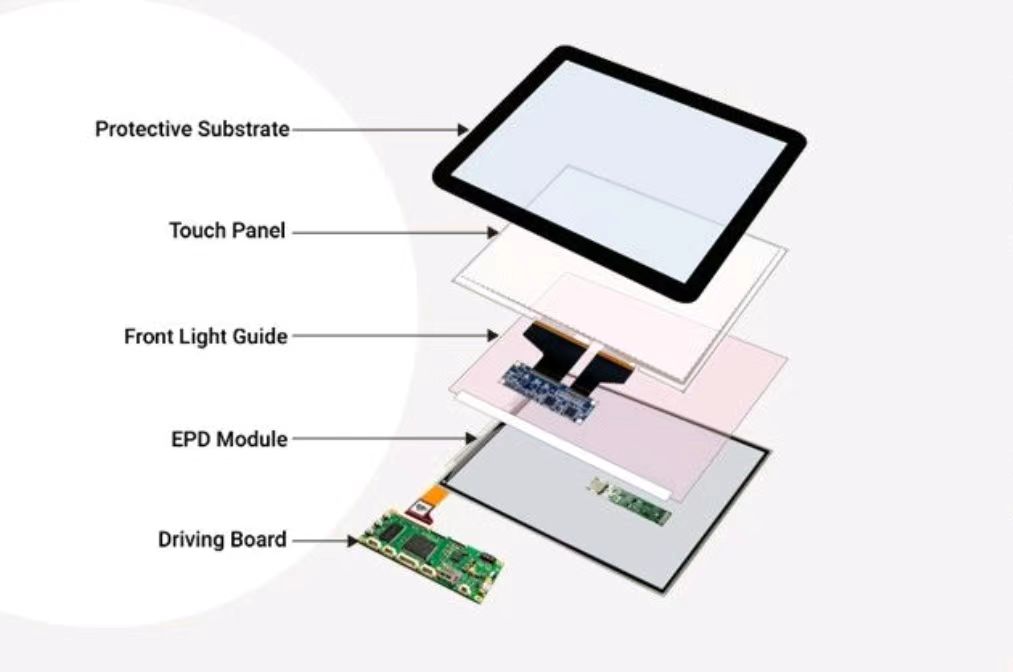
An industrial touch display is more than a glass panel mounted above a sensor. The physical arrangement of the cover glass, adhesive, touch sensor, and LCD forms a complete optical and electrical stack.
A simplified structure may look like this:
Cover Glass → Adhesive or Air Gap → Touch Sensor → LCD
The actual arrangement depends on the module architecture.
Air Bonding vs. Optical Bonding
In an air-bonded design, an air gap remains between certain layers. In a fully optically bonded design, an optical adhesive fills the relevant gap to create a more integrated assembly.
Optical bonding is commonly used to reduce internal reflections, improve outdoor readability, and strengthen the mechanical integration of the display assembly.
However, optical bonding should not be assumed to improve touch sensitivity automatically.
Changes in the layer structure can affect the physical and electrical relationship between the finger, sensor, and surrounding materials. The final effect depends on the sensor architecture, adhesive properties, glass construction, and controller configuration.
For industrial touch displays, bonding methods should therefore be considered during the initial design stage, not treated as an independent upgrade after the touch sensor has already been selected.
DINGTouch can evaluate cover glass, PCAP touch, LCD integration, and optical bonding as a combined design to help meet the requirements of specific industrial applications.
7. How Does Thick Cover Glass Affect Glove Touch and Water Tolerance?
Thick cover glass becomes particularly challenging when an application requires operation with gloves or in wet environments.
Glove Touch Performance
Gloves introduce another insulating layer between the user's finger and the touchscreen. Their electrical characteristics vary considerably depending on material, thickness, moisture content, and construction.
Thin fabric gloves, industrial work gloves, and thick protective gloves should not be treated as equivalent input conditions.
For a custom industrial touchscreen, the engineering team should identify:
-
The exact glove types required
-
Whether the gloves are dry or wet during operation
-
The specified cover glass thickness
-
The required touch accuracy and responsiveness
-
Whether multi-touch operation is necessary
The selected sensor and controller should then be evaluated with representative gloves and the final cover glass configuration.
Water and Moisture Resistance
Water can change the electrical conditions around a projected capacitive sensor. Rain, water droplets, condensation, and wet fingers may generate unwanted signals or make intentional touches more difficult to distinguish from environmental interference.
Possible symptoms include false touches, unstable tracking, missed inputs, and reduced touch accuracy.
If the display is intended for outdoor equipment, marine systems, medical equipment, or industrial machinery exposed to moisture, testing should reproduce the expected water conditions as closely as practical.
It is also important to distinguish between two separate requirements:
-
Environmental protection: Whether the complete assembly meets its required ingress protection rating.
-
Touch operation in moisture: Whether the touchscreen remains usable when water is present.
A display can satisfy a mechanical or ingress protection requirement without necessarily providing reliable touch operation in every wet condition. Both requirements must be evaluated separately.
8. How Does EMI Affect touchscreens with Thick Cover Glass?
Electromagnetic interference (EMI) is another important factor in industrial touchscreen design.
Industrial equipment may contain motors, inverters, switching power supplies, charging circuits, communication modules, and other sources of electrical noise. LCD panels and display-driving electronics can also contribute to the surrounding noise environment.
The touch controller must distinguish valid touch signals from this background interference. When the available touch signal is already limited by a thick dielectric layer, insufficient noise margin can make reliable detection more difficult.
Potential engineering measures include:
-
Optimizing grounding and shielding
-
Reviewing PCB layout and signal routing
-
Evaluating display-to-touch interference
-
Adjusting controller configuration and firmware
-
Reviewing sensor electrode design
-
Testing the integrated system under representative operating conditions
The correct solution depends on the source of interference and the touch system architecture.
A module that performs well on a laboratory bench may behave differently after installation in a metal enclosure or integration with the final power system. System-level verification is therefore essential for demanding industrial applications.
9. Is There a Maximum Cover Glass Thickness for PCAP touchscreen?
There is no universal maximum cover glass thickness that applies to every projected capacitive touchscreen.
The practical limit depends on a combination of factors:
-
Cover glass thickness and material
-
Touch sensor architecture and electrode design
-
Controller IC capabilities
-
Firmware and signal-processing configuration
-
Complete touch stack and bonding structure
-
Required sensitivity and accuracy
-
Glove operation and water exposure
-
Electrical noise and grounding conditions
For example, 3 mm glass may be suitable for one application but require a different sensor configuration or additional optimization for another.
Similarly, applications requiring thicker glass should not be rejected solely because of a general thickness guideline.
The more useful engineering question is:
Can the complete touch system deliver the required performance through the specified cover glass under the actual operating conditions?
The answer should be established through design evaluation and testing rather than a universal thickness rule.
10. How to Select the Right Cover Glass Thickness for an Industrial touchscreen
A structured selection process helps avoid unnecessary redesign and integration problems.
Step 1: Define the Mechanical Requirements
Determine why a particular glass thickness is needed.
Consider impact resistance, abrasion, cleaning chemicals, environmental exposure, mounting structure, and any applicable mechanical or safety requirements.
Step 2: Specify the Touch Requirements
Define how users will interact with the display.
Relevant conditions may include bare-finger operation, specific glove types, wet fingers, outdoor use, multi-touch input, and required response consistency.
Step 3: Match the Sensor and Controller
Select a touch sensor and controller IC appropriate for the required glass thickness and operating conditions.
Evaluate sensor geometry, signal margin, controller compatibility, and the need for firmware tuning.
Step 4: Define the Complete Touch Stack
Confirm the arrangement of the cover glass, adhesive, touch sensor, and LCD. Evaluate air bonding or optical bonding according to the optical, mechanical, and electrical requirements.
Step 5: Validate the Integrated Module
Test the actual cover glass and touch assembly with the intended controller configuration, enclosure, power system, and representative operating conditions.
This final step is particularly important because touch performance can change after integration into the finished product.
11. What Should Be Tested Before Design Approval?
For a standard indoor touchscreen, basic finger testing may be sufficient for an initial feasibility assessment. Industrial applications often require a broader validation plan.
| Test Condition | What to Evaluate |
|---|---|
| Bare finger | Sensitivity, accuracy, and response consistency |
| Representative gloves | Touch detection, responsiveness, and missed inputs |
| Wet finger | Detection stability and unintended input |
| Water droplets | False touches and tracking stability |
| Final enclosure | Mechanical fit, grounding, and electrical integration |
| Operating electronics | Noise immunity and touch stability |
| Environmental extremes | Performance across the specified temperature range, where applicable |
| Multi-touch operation | Simultaneous touch detection and tracking accuracy |
The final test plan should reflect the intended application.
For example, a marine control display may require more extensive moisture and environmental testing than an indoor industrial HMI. A medical device may place greater emphasis on repeated cleaning, usability, and application-specific compliance requirements.
Testing should be conducted using the final or representative cover glass, bonding materials, sensor, controller settings, and installation environment.
 12. How DINGTouch Approaches Custom Industrial Touch Display Design
DINGTouch provides custom industrial capacitive touch and display solutions for applications where mechanical protection and reliable user interaction must work together.
Rather than treating cover glass thickness as an isolated specification, our engineering approach considers the key elements of the complete module:
-
Custom cover glass: Glass dimensions, thickness, surface treatment, and application-specific mechanical requirements.
-
PCAP touch integration: Sensor architecture and controller matching according to the intended input conditions.
-
Optical bonding: Integration of the cover glass, touch sensor, and display to support optical and mechanical requirements.
-
Environmental adaptation: Evaluation of glove operation, moisture exposure, temperature requirements, and electrical noise.
-
Application-oriented validation: Testing the integrated configuration against the customer's actual operating requirements.
For OEM and ODM projects, the most appropriate solution is determined by the finished product's requirements, not by glass thickness alone.
By evaluating the cover glass, touch sensor, controller IC, bonding structure, and system environment together, DINGTouch helps customers develop industrial touch displays that balance durability with practical touch performance.
Learn more about DINGTouch custom industrial touch display solutions at www.szdingtouch.com.

Frequently Asked Questions
Does thicker cover glass always reduce touchscreen sensitivity?
Not necessarily. Greater thickness increases the dielectric distance between the finger and the sensing electrodes, which can make touch detection more challenging. However, the final performance depends on sensor design, controller capabilities, firmware, bonding structure, and operating conditions.
Can a PCAP touchscreen work through 3 mm cover glass?
Yes. A projected capacitive touchscreen can operate through 3 mm cover glass when the sensor, controller, and complete touch stack are appropriately designed and validated for the intended application. There is no universal maximum thickness for all PCAP systems.
Can a touch controller IC compensate for thicker glass?
A suitable controller can help detect and process weaker or more complex signals, depending on its capabilities and configuration. However, it cannot fully compensate for an unsuitable sensor architecture or an inadequately designed touch stack.
Does optical bonding improve touch sensitivity?
Not automatically. Optical bonding changes the physical structure of the display assembly and may affect the operating conditions of the touch system. Its primary benefits are generally optical and mechanical, while touch performance must be verified for the specific design.
Which is more important: cover glass thickness or the touch controller IC?
Neither should be evaluated independently. Cover glass thickness affects the sensing conditions, while the controller processes signals from the sensor. Reliable performance depends on the compatibility of the glass, sensor, controller, firmware, and complete display assembly.
Is thinner cover glass always better for industrial touchscreen?
No. Thinner glass may make touch detection easier in some designs, but it may not meet the mechanical protection or durability requirements of the application. The correct thickness is the one that satisfies mechanical requirements while allowing the complete touch system to deliver the required performance.
What information should I provide when requesting a custom industrial touchscreen?
For an initial technical evaluation, provide the display size, required cover glass thickness, touch technology, interface, operating temperature, glove or water requirements, brightness, bonding preference, and intended application.
If the sensor or controller has already been specified, include those details as well. This helps the engineering team assess feasibility and identify potential integration challenges early in development.
Conclusion
Cover glass thickness is an important design parameter for industrial touchscreens, but it should never be treated as an isolated specification.
Thicker glass may be necessary for impact resistance, durability, cleaning requirements, or demanding operating environments. The engineering challenge is to design the touch system around those requirements rather than compromise mechanical protection simply to make touch detection easier.
The most reliable approach is to evaluate the cover glass, PCAP sensor, controller IC, firmware, bonding structure, and operating environment as one integrated system.
For industrial OEM and ODM projects, DINGTouch supports custom touch display development with a system-level approach to cover glass, capacitive touch integration, and optical bonding.
Visit www.szdingtouch.com to learn more about DINGTouch industrial touch display solutions.



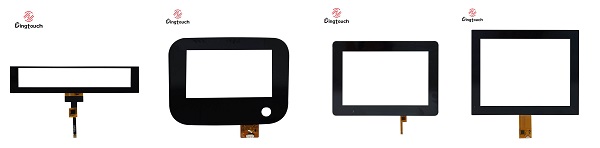
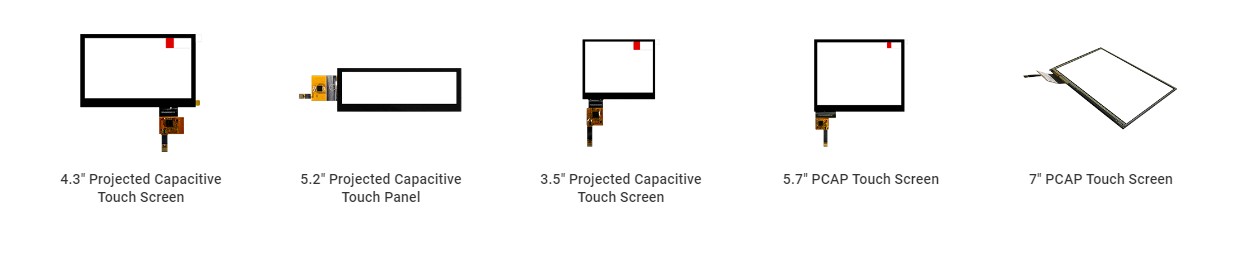
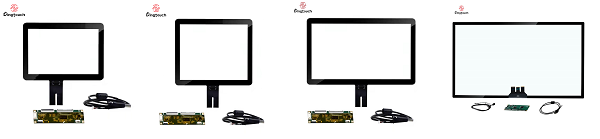
Ready to Build Your Outdoor Display Solution?
Get in touch with us at sales@szdingtouch.com. Our expert engineers will help you design a cost-effective, tailored solution to meet your project’s exact specifications.
DINGTouch:Committed to continuous innovation and improvement of product quality to meet customers' high requirements and expectations.
DINGTouch is a manufacturer that provides high quality touch screen panels. Focus on the design, manufacturing and sales of touch screen panels, and are committed to providing customized solutions that satisfy customers.
DINGTouch: In the process of customizing touch screen panels, we focus on close cooperation and communication with customers. Understanding customers' needs and providing customized solutions will meet customers' individual needs. The company's products are favored by customers for their high quality and reliability, and provide them with the best touchscreen panel solutions.
At DINGTOUCH, we are the world's leading touchscreen manufacturer, helping businesses around the world take advantage of this exciting technology. For more information, please visit the home page now.

DINGTouch is a company specializing in the R&D and production of touch screen technology, headquartered in Shenzhen, China. As a professional touch screen supplier, DINGTouch is committed to providing high-quality, stable and reliable touch screen products to meet the diverse needs of customers. We continue to carry out technological innovation and product optimization to ensure that its touch screen products have good sensitivity, accuracy and durability.
In addition to the products themselves, we also focus on cooperation and communication with customers, and are committed to providing customized solutions and excellent after-sales services. Through continuous efforts to improve product quality and customer satisfaction, we have established a good reputation in the touchscreen industry and won widespread market recognition.
In addition to the products themselves, we also focus on cooperation and communication with customers, and are committed to providing customized solutions and excellent after-sales services. Through continuous efforts to improve product quality and customer satisfaction, we have established a good reputation in the touchscreen industry and won widespread market recognition.
What DINGTOUCH can do:
• PCAP maximum size 65”
• Multi-touch (Touch screen can be customized to your needs.)
• Optical bonding service/air bonding
• LCD interface: HDMI/RGB/MIPI/LVDS/EDP, etc.
• PCAP interface: IIC/USB interface
• CTP can customize the cover glass surface treatment process AG (anti-glare), AR (anti-reflection), AF (anti-fingerprint), waterproof, and glove touch
• Supports 0.55 mm-12 mm coverslip touch.
• Support operating temperature: -40℃-90℃.
Dingtouch Industrial capacitive touch screen Manufacturer
In conclusion, Dingtouch as a professional touch screen manufacturer with more than 10 years touch screen experience.We have many capacitive touch screen. Such as 5 inch touch screen,7 inch touch screen,10.1inch touch screen,15 inch touch screen,15.6 inch touch screen,17 inch touch screen,18.5 inch touch screen,19 inch touch screen,21.5 inch touch screen,
CATEGORIES
CONTACT US
Contact: Dingtouch
Phone: +8615815536116
Tel: +8615815536116
Email: sales@szdingtouch.com
Add: Building A, Bailu Plaza, No. 48, Gonghe Industrial Road, Gongle Community, Xixiang Street, Baoan District, Shenzhen,China. 518126
 Dingtouch